“Courage doesn’t mean you don’t get afraid. Courage means you don’t let fear stop you,” said Bethany Hamilton, the American professional surfer who survived a 2003 shark attack in which her left arm was bitten off, and ultimately returned to — and was victorious in — professional surfing.
So what can we learn about success, failure, and courage from this truly amazing woman? That’s the topic we tackle in the June 2016 issue of Be Inkandescent magazine.
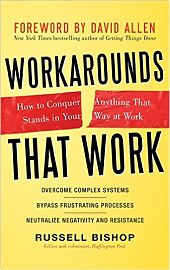
To help guide us on our journey is author, consultant, and executive coach Russell Bishop, who was one of the founding editors at the Huffington Post. He writes, “What if you could actually create the success you say you want in life? Could your fear of success actually get in your way?” Interesting question, right? Scroll down for his insights.
Also in this issue:
Are you in the FLWSTATE? “It’s not what you do but how you do it,” says Aidan Sheahan, the 24-year-old professional skier who focuses on being mindful and navigating this world with two feet planted firmly on the ground, even when he’s flying through the air.
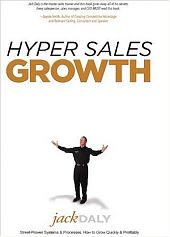
What are the three major sins of sales management? “Hyper Sales Growth” author Jack Daly explains.
Play with your food! What better way to achieve success than to make your hands, and belly, happy? Try this fun recipe for waffles — in French — by Dylan Gibbs, 17.
We leave you with this parting thought from Winston Churchill, who said, “Success is not final, failure is not fatal: It is the courage to continue that counts.” Read more words of wisdom in this month’s Inkandescent Quotes.
By Russell Bishop Author, consultant, and executive coach
What if you could actually create the success you say you want in life? Could your fear of success get in your way?
The fear of failure is a somewhat common scapegoat in the world of excuses. In a 2011 Wall Street Journal article, the director of DARPA, Dr. Regina Dugan, argued that “you can’t lose your nerve for the big failure, because the nerve you need for the big success is the exact same nerve.”
Indeed, Dr. Dugan brings an important element into the discussion of what it takes to get ahead. You do need to be able to stomach the downside potential of any move you make to get ahead, even if it’s as simple and mundane as the risk you assume when you get behind the wheel of your car.
However, when confronting the myriad challenges we face in life, one oft-overlooked limiting factor might just be what some have called the “fear of success.”
Fear of success and fear of failure can be very closely aligned. On the surface, this notion might seem ridiculous — what on Earth could be scary about success? But if you dig a bit below the surface, you might discover some powerfully limiting aspects of your own mindset, of your own approach to life. Let’s do a little digging.
Is “the Familiar” in Your Way?
Consider this question: Have you become accustomed to life as it is for you now? What a dumb question — of course you have, even if what you have become accustomed to is not quite what you would prefer.
We’ve all heard of the “comfort zone,” and most of us have been in a discussion or two about the role of the comfort zone in holding people back. However, most people miss the real power of this notion by wrongly assuming that the comfort zone refers to something about being comfortable.
I know this may sound a bit nuts, but hang in there a moment or two. As you think about this for a bit, you may realize that you are typically most comfortable in surroundings that are most familiar.
Even people who engage in dangerous activities like rock climbing will attest that while it’s not so physically comfortable out there hanging off a rock wall, and while the risks can be high, the experienced rock climber can still be quite comfortable, both with the lack of physical comfort as well as with the inherent risk. Why? Because she is extremely familiar with the environment and what it takes to succeed in climbing that sheer wall.
If you don’t particularly like your job or some other aspect of your life, you may also find that you have become comfortable with it if for no reason other than the fact that it is familiar.
If this is you, if you grouse about your daily circumstances yet keep returning to them, then you may be a member of what I call the “ain’t-it-awful club.” Members of this club love to engage in “one-downsmanship”: “You think that’s bad, wait until you hear this one.” You may also know this one as “misery loves company.”
Perhaps you have also settled for the “weevily peanuts” of life rather than going for life’s banquet table. Settling for less is a very individual set of choices and definitions, and it is not my intent to define either the peanuts or the banquet table for you. However, if you have the sense that you have settled more than strived for what you want, then it might be worth your while to explore how your fear of success is in the way.
As much as you may complain about the job/company/boss, have you become comfortable or familiar with what it takes to get by in your current circumstance — not necessarily to succeed, but to at least get by? Breaking out from the familiar, from what got you here, may not be very comfortable, and it may conjure up some fears or risks in your mind.
Giving up membership in the ain’t-it-awful club and letting go of weevily peanuts may have any number of risks associated with them, but the risks have more to do with new success behaviors than they do with the fear of failure.
What Are the Downsides to Success?
Consider this: What would happen if you were to achieve the success you think you would prefer? What if the job changed dramatically, the income surged, the relationships were vastly improved? Look beyond the obvious (“I’d be richer/happier/better off”) and ask yourself, “What demands would there be on me if …? What would I have to do or be differently?”
This is where it gets interesting. Let’s take a promotion as an example: If you did rise to a higher level in your job, what behaviors or skills would you have to evidence? What would others now demand of you? What would you have to do differently? How would you have to interact differently with co-workers, family, or friends? Are these skills or behaviors that you already have, skills or behaviors with which you are already comfortable?
There’s a good chance that the answer is “no.”
In my career coaching managers and executives in businesses large and small, I have often witnessed the changes that befall the person who wins a promotion, especially when someone moves from co-worker into a management position or from middle management to senior executive.
Co-workers who used to be buddies somehow begin to distance themselves, and the newly minted manager needs to resign membership in the ain’t-it-awful club. No longer is grousing about the boss acceptable; the challenge now is to fix rather than complain. Fixing and complaining are different skill sets. Are you more complainer than fixer?
What Do You Tell Yourself Before You Start?
Have you ever entertained thoughts about what might happen if …? Imagine telling yourself a story that goes something like this: “Well, first I’ll be the one with the office. Then I’ll be the one making decisions. But what if the decisions don’t work out? What if I don’t know what to do? What if I’m not very good at it?
“Now I’m going to tell them what to do, and then I’m going to have to do their performance reviews. How will my friends/co-workers respond to me being in charge? What if they start complaining about me? What if they abandon me?”
These negative “what if” scenarios may sound pretty darn close to fear of failure. However, underneath them lies a precursor fear: “What if I get what I say I want and I’m not prepared to handle it? What if I’m just an imposter pretending that I know what to do?”
The subtle little twist here is that while you might be able to imagine success and even create it, the doubt remains that you will be able to handle it. The fear of success then often shows up as self-doubt, as an inner voice reminding you that you probably can’t handle the success you want.
Fear of success might be in your way. Keep asking yourself what you want out of life and why you want it. What have you told yourself about taking the risks necessary to create what you want? What have you found useful in overcoming obstacles, in creating your own version of success in life?
Don’t stop now!
Click here to read more of Russell Bishop’s “Nine Tips for Stepping Out of Your Fear of Success and Into the Life You Deserve” in this month’s Tips for Entrepreneurs.
1. If you don’t know where you are going, any road will do. Get yourself as clear as possible on where you are going and, more importantly, why you are going there. Everyone has had the experience of wanting something, busting their tail to get it, and then wondering why they ever wanted it in the first place. Keep in mind that what you are really after is the underlying experience — for most people that’s a combination of joy, freedom, security, expansion, and love. Click here to for more information and perspective.
2. Imagine success before you even start. Begin with the end in mind — we all know that one. If you know what experience you truly seek, make certain that you begin by imagining yourself succeeding. What will it look like? What will you feel like? What will it be like along the way? Keep imagining that positive outcome. The more you practice succeeding in your mind, the more familiar success will become for you — a new comfort zone will begin emerging, one where success is the new normal. And the more practiced you are at being successful along the way, the more observant you will become on choices you can make along the way that will help you get to the outcome you seek.
3. You don’t get what you deserve — you get what you focus on. If you don’t think you deserve success, then you will focus on the roadblocks, what can go wrong, and myriad other issues, all of which will add up to encountering all manner of challenges, perhaps even self-defeating challenges, along the way. And you may wind up telling yourself that you were right — you don’t deserve success or that people like you don’t win — why else would all of these problems keep showing up? So, keep your focus on those images of success and positive feelings that come with them.
4. Positive thinking just doesn’t work. OK, a bit of a twist here, or so it would seem. If all it took were positive thinking, there’d be a whole lot of people not doing very much except daydreaming. Positive work, works. But how do you take a positive action without a positive focus? Keep a positive focus, keep imagining your successful outcomes, and then take that next step that moves you along the way. Even if that step may seem sideways or even the proverbial one step back, keep moving toward your vision.
5. Embrace what others call failure. Successful human beings do not make mistakes; they just make choices that don’t work out as well as they had hoped. It’s said that Edison tried more than 1,000 combinations of filament and gas before he arrived at a lightbulb that worked. As he framed it, the lightbulb had more than 1,000 steps before it showed up. Thank goodness he didn’t declare failure after the first 500 combinations! Successful people keep on choosing and keep on moving.
6. “It’s a cinch by the inch and hard by the yard.” We all know about the journey of a thousand miles. The question: So how many steps does it take for your particular journey? It’s not just math — a thousand miles divided by the average stride won’t get you there. Getting there gets you there — you may run into detours along the way, unplanned side trips, or any number of new adventures. Just keep the outcome in mind, enjoy each micro-step, and you will have a great time accomplishing your dreams.
7. Be prepared to learn something new along the way. Sometimes the dream changes along the way — not so much the quality of experience but the objective stuff. What if you set out on a goal and discover that there’s something even more fulfilling along the way? The trick is in being willing to explore the new information without sabotaging your mission. The goal or objective may change along the way, but the desired outcome usually stays put, if not actually turns out better than you could have imagined. One of my favorite affirmations: I am experiencing miracles as my seemingly impossible good is happening now. French psychologist Émile Coué said it this way: Every day in every way, I am getting better, better, and better.
8. Enjoy the appetizers along the way to the banquet table. Really fine dining often begins with an amuse-bouche — something to please the palate and invite you into the banquet that is to follow. As you learn more about your journey, you will discover that you are the chef, the server, and the one dining. If you have ever enjoyed a meal prepared by someone who loved what they were doing, then you already know that the best meals are prepared with love and joy. So, put love into your experience. It’s for you after all.
9. Be grateful — every day. Every night before going to sleep, I like to start by acknowledging anything I may have judged myself for during the day and then forgiving myself for having judged myself. That’s an important step in reminding myself that it’s about taking those micro-steps. Next, I go over little things I experienced during the day for which I am grateful. Funny thing is, those little things have a way of building into bigger things and the gratitude builds. Last thing before dropping off to sleep, I imagine those positive outcomes and the gratitude that I hold for them. Now that’s a really good day.
A person who learns to juggle six balls will be more skilled than the person who never tries to juggle more than three.”
– Marilyn vos Savant
Pain is inevitable. Suffering is optional.”
– Dalai Lama
4oz tequila + 1oz TripleSec + 2oz lime juice + 1oz simple syrup (sugar=water), 1 cup crushed ice. Shake + dance around the kitchen.
– Avenida Margarita
Everyone is a mirror image of yourself—your own thinking coming back at you.”
– Byron Katie
Just don’t give up trying to do what you really want to do. Where there is love and inspiration, I don’t think you can go wrong.”
– Ella Fitzgerald
Happy are those who dream dreams and are ready to pay the price to make them come true.”
– Leo Jozef Suenens
Of course there is no formula for success except perhaps an unconditional acceptance of life and what it brings.”
– Arthur Rubinstein
The man who acquires the ability to take full possession of his own mind may take possession of anything else to which he is justly entitled.”
– Andrew Carnegie
The only dream worth having is to live while you’re alive and die only when you’re dead.”
– Arundhati Roy
The goal of Life is to make your heartbeat match the beat of the universe, to match your nature with nature.”
– Joseph Cambell
He who wants to tear down a house must be prepared to rebuild it.”
– African Proverb
Patience and perseverance have a magical effect before which obstacles vanish.”
– John Quincy Adams
Always be on the lookout for the presence of wonder.”
– E.B. White
Whosoever knows how to fight well is not angry. Whosoever knows how to conquer enemies does not fight them.”
– Lao Tzu, Tao Te Ching
I find out what the world needs, then I proceed to invent.”
– Thomas Edison
Nurture your mind with great thoughts; to believe in the heroic makes heroes.”
– Benjamin Disraeli
We are not meant to resolve all contradictions, but to live with them and rise above them.”
– William Blake
My goal was to tell the life side of the story. We have become a nation of voyeurs that expect sensationalism, and that offends me.”
– Kathleen Jo Ryan
Spend the afternoon. You can’t take it with you.”
– Annie Dillard
We never know how high we are till we are called to rise; And then, if we are true to plan, Our statures touch the skies.”
– Emily Dickinson
If people like you they’ll listen to you; if they trust you, they’ll do business with you.”
– Zig Ziglar
The gem cannot be polished without friction; nor man perfected without trials.”
– Chinese proverb
If you were independently wealthy and never had to work a day in your life, would you still choose to spend your time attempting to become a successful entrepreneur?”
– Steven Schussler
They who give have all things. They who withhold have nothing.”
– Hindu Proverb
There is little success where there is little laughter.”
– Andrew Carnegie
The best reason to start an organization is to create a product or service to make the world a better place.”
– Guy Kawasaki
Always look at what you have left. Never look at what you have lost.”
– Robert H. Schuller
No man will make a great leader who wants to do it all himself, or to get all the credit for doing it”
– Andrew Carnegie
Nothing in the world can take the place of persistence.”
– President Calvin Coolidge
The less effort, the faster and more powerful you will be.”
– Bruce Lee
Remove those ‘I want you to like me’ stickers from your forehead and, instead, place them where they truly will do the most good—on your mirror.”
– Susan Jeffers
Who cares if my glass is half empty or half full; I still have something to drink.”
– Optimism rules
Always bear in mind that your own resolution to succeed is more important than any one thing.”
– Abraham Lincoln
That which grows fast withers as rapidly; that which grows slowly endures.”
– J.G. Holland, novelist
There are risks and costs to a program of action. But they are far less than the long-range risks and costs of comfortable inaction.”
– JFK
The journey is the reward.”
– Greg Norman
You’ve got to be willing to crash and burn. If you’re afraid of failing, you won’t get very far.”
– Steve Jobs
Running that first shop taught me business is not financial science; it’s about trading.”
– Anita Roddick, founder, The Body Shop
When I dare to be powerful—to use my strength in the service of my vision, then it becomes less and less important whether I am afraid.”
– Audre Lorde
What would you attempt to do if you knew you could not fail?”
– Magical
Tolerance and patience should not be read as signs of weakness. They are signs of strength.”
– The Dalai Lama
If you do not tell the truth about yourself , you cannot tell it about other people.”
– Virginia Woolf
I will pay more for the ability to deal with people than any other ability under the sun.”
– John D. Rockefeller
Be bold and mighty forces will come to your aid.”
– Basil King
Great minds discuss ideas. Average minds discuss events. Small minds discuss people.”
– Eleanor Roosevelt
Do you believe it is important to give back some portion of your wealth to support charitable causes?”
– Steven Schussler
As each woman realizes her power, she transforms the world.”
– Patrice Wynne, WomanSpirit Sourcebook
I’ve come to confirm that one’s title, even that of president, says little about how well one’s life has been led. No matter how much you’ve done, or how successful you’ve been, there’s always more to do, to learn, and to achieve.”
– Barack Obama
We make a living by what we get; we make a life by what we give.”
– Winston Churchill
The great use of life is to spend it on something that will outlast it.”
– William James
Be Inkandescent Magazine's Back Issues
Don’t miss the great advice our entrepreneurs have offered in the past. Click below to view our back issues.