• February 2015

Exploring the Science of Sex

Each February we talk about the power and importance of love when it comes to operating a powerful, successful business. This year we thought it would be fun to feature a scientist who focuses not just on our professional lives, but also on our personal ones.

That doesn’t mean the research that Andrea Kuszewski does has no connection to our companies. Rather, the science she studies has turned up some fascinating facts that cross the line between work and play. Intrigued? Scroll down to read our Q&A with Kuszewski. And click here to listen to our podcast interview on the Inkandescent Radio Network.

That’s not the only way we’re turning up the heat this month.

  • “Soul Mates” is our Book of the Month, in which Thomas Moore teaches us how to honor the mysteries of love and relationships.
  • Will your marriage last? Find out how your instincts know what your future love life will bring in Intuition Rules.
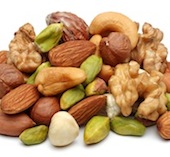
  • And we couldn’t help but play with our theme of love and sex in this month’s Food column, where you’ll find the health benefits of nuts.
  • You’ll also find loads of additional practical advice when you meet Stephanie Phillips, director of client relationships at the Greater Richmond Chamber of Commerce. Hiring expert Barbara Mitchell shares tips for hiring well from her book, “The Big Book of HR.” And when it comes to Estate Planning, don’t miss this month’s installment of Lisa Hughes’ advice.

We leave you with this parting thought from “Soul Mates.” “The heart is a mystery — not a puzzle that can’t be solved, but a mystery in the religious sense: unfathomable, beyond manipulation, showing traces of the finger of God at work.” — Thomas Moore

Sending you and yours wishes for an open heart and endless amounts of love this Valentine’s Day. May you always be inkandescent! — Hope Katz Gibbs, publisher, Be Inkandescent • Illustrations by Michael Gibbs

Andrea Kuszewski on the Science of Sex

YOUR
BRAIN ON INTIMACY:

ANDREA KUSZEWSKI GIVES US
A LOOK
INSIDE OUR
HEARTS, AND
OUR MINDS

By Hope Katz Gibbs,
Publisher
Be Inkandescent

Illustrations by Michael Gibbs

Research scientist Andrea Kuszewski (pictured here) is a behavior therapist and consultant who treats children and families with autism spectrum disorders, specializing in Asperger’s syndrome. Her writing is regularly featured in Scientific American, Discover Magazine, Qualcomm Spark, and WIRED UK, among other national and international publications.

What makes her work universally popular is that Kuszewski is an expert on a topic that we hold near and dear to our hearts: She studies what makes us feel loved and desirable, and why we’re attracted to some people and not others. And she shows us what we can do to make our love and work lives richer, fuller, and more satisfying.

I can’t think of a better cover story for our Love Issue: February 2015. Scroll down for my Q&A with Andrea Kuszewski. And click here to listen to our podcast interview.


THE SECRETS BEHIND THE SCIENCE OF SEX

Be Inkandescent: Let’s get down to the heart of this topic. What’s the science of sex?

Andrea Kuszewski: It starts with the neuroscience of what is going on in the brain, and how that relates to behavior. One of the biggest myths out there about neuroscience surrounds dopamine and oxytocin.

Dopamine is considered the pleasure molecule, and more specifically it’s a pleasure neurotransmitter. What we have found out in recent years is that it is actually more related to the pleasure of anticipation rather than just pleasure. It’s not that you experience something and it gives you a hit of dopamine; it’s that you know something you like might be coming.

Be Inkandescent: So the anticipation triggers dopamine in different ways. What about oxytocin?

Andrea Kuszewski: Oxytocin, which some people call “the cuddle hormone,” turns out to not be just about bonding. It is the release after an orgasm when you get this hit of oxytocin. And what it does is help form attachments, or strengthens attachments and bonds that are already there.

Be Inkandescent: Can it also have a negative effect on our relationships?

Andrea Kuszewski: It can! There is actually a big myth about oxytocin that I want to clear up. Researchers have found that oxytocin also strengthens stereotype behaviors.

So if you are prejudiced against some group and you get a sudden spray of oxytocin, you are not going to start liking that group. In fact, you are more than likely going to want to be even more distant and separate from them.

Be Inkandescent: The research you do not only impacts a person’s love life — it shows that neuroscience is relevant to all of our relationships, including the bonds we develop with employees, colleagues, customers, and vendors.

Andrea Kuszewski: This really is a fascinating topic, and it’s also the reason why relationships are hard. In fact, even though the science behind sexual attraction and pleasure is so new, we already know that it’s difficult to always be doing the right thing at the right time to get the outcome we want — in our professional and personal lives.

For instance, when we are stressed-out, and we are looking for some sense of peace, our brains seek out symmetry. It is very calming to our brains, because symmetry puts us at ease, pulls us together, and puts us in that nice grounded state.

Be Inkandescent: When you talk about symmetry, what do you mean? For instance, does it describe someone who has symmetrical facial features, and objects that have symmetrical shapes?

Andrea Kuszewski: Yes, that’s right. Specifically, studies show that symmetrical faces are pretty rare. The average person has an asymmetrical face, but some people come really close, like actor Denzel Washington (pictured here). You look at him and can’t help but think, “Yeah, he is an attractive man.” So if you want to relax, pop a picture of Denzel up on your laptop or Smartphone.

But if you are looking to get excited, take a look at actor Joaquin Phoenix (shown below). He has that scar above his lip, and he has got that one eye that is a little more open than the other one. And he is one hot guy!

The research explains why, since it suggests that asymmetry is actually more attractive because it offers a little bit of something different. And, it triggers dopamine.

So the key here is novelty, mystery, things that don’t quite fit. When there is that little bit left hanging, it makes you wonder a little bit, and you get a hit of dopamine. It is the anticipation of pleasure that triggers that reward system.

Be Inkandescent: Is that why some people are attracted to the nice guy or nice girl “next door” versus the “bad boy” or woman with an edge?

Andrea Kuszewski: Yes. The nice person is calming, predictable, and offers nothing out of the ordinary, which is good for some people. But then you have the bad boy and maybe he is kind of a jerk, but you never know what he is going to do — which can be exciting.

You don’t know why you are drawn to this person, but you can’t seem to walk away. The good news is that there are ways to get the novelty without having to go through chaos and negativity.

Be Inkandescent: You just have to be aware of it, and realize that it’s your brain chemistry at work. And we can take comfort in the fact that we are not perfect, but that might actually work for us in the romance field.

Andrea Kuszewski: Yeah! The key is knowing yourself and your own preferences, and then finding someone who brings that to the table. Not everyone likes novelty, of course. Some people really like peace, calm, and predictability.

But even those people like a little novelty. And then there are people way on the other end of the spectrum, who by nature are thrillseekers. They are usually more attracted to risk takers or the kind of people who you never know what they are going to do. Everyone is unique.

Be Inkandescent: How does this play out in the workplace?

To find out, click here to read more in our February 2015 Tips for Entrepreneurs.

Mastering the Science of Sex: 3 Tips to Guide You

Once you understand the science behind how your brain is working when you feel emotions such as love, lust, attraction, and repulsion, how can that information help you master relationships — in the bedroom, and in the boardroom?

That’s just one of the questions we asked research scientist Andrea Kuszewski (pictured here) to shed some light on. Scroll down for our Q&A.


Be Inkandescent: When it comes to managing your relationships well at work, what are the three most important things to think about regarding the science of sex?

Andrea Kuszewski: Here are my top three.

  1. If you are trying to motivate someone to change their behavior, don’t focus so much on pleasure and what people like. Instead, think about the anticipation of pleasure as a reward. So if you can find a way to create anticipation, then motivation will increase. It is the carrot to the stick. You don’t want to make it too easy for someone — even yourself — to get what they want. Create a little bit of a challenge to attain what you want. It’s not manipulation as much as it is the way our brain is set up to learn and respond.
  2. When it comes to relationships — romantic and professional ones — if you want to be happy and successful, you need to be honest about what you prefer. A lot of people may assume they should want stability and say, “I am looking for a nice guy or a nice girl.” But if you really are drawn to novelty, and you are a thrillseeking kind of person, then you can have a partner or friend who is nice — but what will really make you happy is being with someone who lives on the edge a bit. And remember, boring doesn’t always mean nice, and bad doesn’t always mean exciting, even though those traditional associations can hold true.
  3. Similarly, if you want to keep other people — a lover or colleague, or even a boss — interested and tuned in, you have to be interesting yourself. So if growth in your job is your goal, be sure to excite people a bit. Add a bit of novelty and unpredictability to what you do on the job.

Be Inkandescent: So the key to being successful in our love lives, and at work, is to harness the power of two neurotransmitters — dopamine and oxytocin?

Andrea Kuszewski: Yes. Driving up anticipation as much as possible is one of the best ways to keep motivation and satisfaction high because you are constantly going toward something. It also ties in with how we learn and how we are driven to complete goals. So, the best thing to do is to set goals that are challenging yet achievable. That will result in the highest level of dopamine possible. Once you do achieve that goal, you experience the satisfaction of feeling good about yourself and accomplishing something. You are actually more compelled to set another goal and jump right into the next challenge. So the key to high success is to constantly be setting new goals for yourself. This keeps achievement, motivation, and pleasure high.

Be Inkandescent: Are we just slaves to our neurotransmitters?

Andrea Kuszewski: In a way we are. But knowing what they can do, we can kind of “hack” it for our own personal purposes. We can harness that energy; I do this all the time. Right now I am working in my home office so I have a lot of freedom, but not a whole lot of structure. In order for me to stay motivated and keep performing at a high level, without any of the traditional structures in place that I’d typically have in a workplace, I have to create them for myself. So if something good happens — say that I find out that something I wrote is going to get published — I will not permit myself to feel or think about it, much less celebrate it, until after I have completed whatever difficult task I am working on. I will purposely hold back so the anticipation builds. I purposely set it up so that there is this little bit of tension.

Be Inkandescent: That makes me think of the part of your research that you call a “neurological orgasm.” Tell us about that.

Andrea Kuszewski: This relates directly what I was talking about regarding dopamine and oxytocin. Basically, not every orgasm or pleasure response is the same. Chemically it is, but the amount of time spent and the levels of neurotransmitters being released are all based on the situation. If you know that the anticipation of something makes it more exciting, it triggers more dopamine. If we can draw out the anticipation for as long as possible before we allow ourselves to reach orgasms, physically and emotionally, we get that hit of oxytocin and are actually going to have a stronger response. There won’t necessarily be more oxytocin released, but the bond will be stronger because of that long, drawn-out pleasure response.

Be Inkandescent: Is this true when it comes to physical pleasure, as well?

Andrea Kuszewski: Everyone has had good and bad sex. If an orgasm happened in 30 seconds, maybe the sex was good for that 30 seconds, and maybe you had an orgasm … but you can probably look back at other times where it felt different. Most likely, a lot more dopamine was involved in those other times because the anticipation of climax was greater. Even though physically you still had the orgasm in the first instance, the second will be more enjoyable because of all the elements involved. The longer you can prolong that release of dopamine, the greater the pleasure response will be.

Be Inkandescent: Is it true that dopamine is primarily responsible for motivation?

Andrea Kuszewski: There have been a lot of studies to suggest that. Researchers studying the amount of dopamine in the brain had people engage in some sort of stimulus — doing something that they liked — and every time they preformed a simple task they got a reward, such as an M&M. Right before they get the reward, they anticipated that they were going to get it, so there was a spike of dopamine. If you repeat this 20-50 times in a row knowing you are going to get that reward, the dopamine will steadily dwindle because now you know the reward is coming and it starts to get kind of boring. So with another group, researchers gave the test subjects the reward only half of the time, and they didn’t know when they were going to get it. If you are dong something difficult and you get a reward every time, you would think that it would be pretty motivating and that you would keep doing it. But if you’re doing a difficult task and you may or may not get a reward this time, but at some point you will get a reward, would you think that dopamine would spike higher or lower? Most people would think lower, but it is actually higher.

Be Inkandescent: A boss could use that to his or her advantage with employees.

Andrea Kuszewski: Absolutely. Create some perks or incentives, but be sure there is a bit of a challenge involved. It’s the basic idea behind Christmas and birthday presents: You know that you are going to get something because it’s a holiday, but you don’t know what it is. When there’s an aspect that’s somewhat secret, it is more exciting because you don’t know what is coming.

Be Inkandescent: Now for our last question. Since we have a networking site, “www.InkandescentNetworking.com,” and espouse the power of connecting, we were fascinated by your research about the fact that networking makes you smarter. Talk a little bit more about that phenomenon.

Andrea Kuszewski: Networking is one of the five principles I have came up with that increase intelligence and cognitive ability. It’s not that networking alone will make you smarter, per se. It’s more that we learn best when we teach other people. So if we want to learn something just for our own good, we will likely learn it if we are interested in it. But if you have to teach it to other people, you will actually learn it better. When you explain something to other people, you are looking at it through different angles, and you think of examples. Plus, any time you get feedback on something or engage in a conversation about something, or talk about your field of expertise, those are all conditions for cognitive growth. By networking with other people, you are allowing those things to happen all at once over a prolonged period of time. So that makes you smarter.

Don’t stop here! Listen to our podcast interview with Andrea Kuszewski on the Inkandescent Radio Network.

And learn even more about Kuszewski at www.andreakuszewski.com.

Don’t think. Thinking is the enemy of creativity.”

– Ray Bradbury

It is only when the mind is free from the old that it meets everything anew, and in that there is joy.”

– J. Kristnhamurti, The First and Last Freedom

If you think you are too small to make a difference, try going to sleep with a mosquito in your room.”

– A wisdomism

You must learn to be still in the midst of activity 
and to be vibrantly alive in repose.”

– Indira Ghandi

We are all faced with a series of great opportunities brilliantly disguised as impossible situations.”

– Charles R. Swindoll

No one is useless in this world who lightens the burden of another.”

– Charles Dickens

The curious paradox is that when I accept myself just as I am, then I can change.”

– Carl Rogers

If it isn’t good, let it die. If it doesn’t die, make it good.”

– Ajahn Chah

No man will make a great leader who wants to do it all himself, or to get all the credit for doing it”

– Andrew Carnegie

It is easier to fight for one’s principles than to live up to them.”

– Alfred Adler

Our deepest wishes are whispers of our authentic selves. We must learn to respect them. We must learn to listen.”

– Sarah Ban Breathnach

The mind is everything. What you think, you become.”

– Buddha

Once you find something you love to do, be the best at doing it.”

– Debbi Fields, Mrs. Fields Cookies

What is the point of having free will if one cannot occasionally spit in the eye of destiny?”

– Jim Butcher, White Night

When you are asked if you can do a job, tell ‘em, ‘Certainly I can!’ Then get busy and find out how to do it.”

– Theodore Roosevelt

Do you have the desire to create something new; the strength of conviction to believe your creation will be successful, and the reservoir of energy necessary to thrust it into the marketplace?”

– Steven Schussler

The less effort, the faster and more powerful you will be.”

– Bruce Lee

A discovery is said to be an accident meeting a prepared mind.”

– Albert Szent-Gyorgyi

If you were independently wealthy and never had to work a day in your life, would you still choose to spend your time attempting to become a successful entrepreneur?”

– Steven Schussler

Practice kindness all day to everybody and you will realize you’re already in heaven now.”

– Jack Kerouac

Hold fast to dreams, for if dreams die, life is a broken-winged bird that cannot fly. Hold fast to dreams, for when dreams go, life is a barren field frozen with snow.”

– Langston Hughes

Don’t wait for someone else to lead you to your right life; that privilege—and responsibility—is yours alone.”

– Martha Beck

As each woman realizes her power, she transforms the world.”

– Patrice Wynne, WomanSpirit Sourcebook

My goal was to tell the life side of the story. We have become a nation of voyeurs that expect sensationalism, and that offends me.”

– Kathleen Jo Ryan

I will pay more for the ability to deal with people than any other ability under the sun.”

– John D. Rockefeller

Education is the most powerful weapon which you can use to change the world.”

– Nelson Mandela

We need to learn to set our course by the stars, not by the lights of every passing ship.”

– General Omar Bradley

The best reason to start an organization is to create a product or service to make the world a better place.”

– Guy Kawasaki

Entrepreneurs willingly assume responsibility for the success or failure of a venture and are answerable for all its facets.”

– Victor Kiam

Everyone is a mirror image of yourself—your own thinking coming back at you.”

– Byron Katie

An entrepreneur tends to bite off a little more than he can chew hoping he’ll quickly learn how to chew it.“


– Roy Ash, co-founder of Litton Industries

With ordinary talents and extraordinary perseverance, all things are attainable.”

– Sir Thomas Fowell Buxton

Nobody talks about entrepreneurship as survival, but that’s exactly what nurtures creative thinking.”

– Anita Roddick, founder, The Body Shop

Passion makes perfect.”

– Eugene Biro

We need to learn to set our course by the stars, not by the lights of every passing ship.”

– General Omar Bradley

Pain is inevitable. Suffering is optional.”

– Dalai Lama

Letting go of expectations is a ticket to peace. It allows us to ride over every crisis—small or large—like a beach ball on water.”

– Martha Beck

Do not follow where the path may lead. Go, instead, where there is no path and leave a trail.”

– Ralph Waldo Emerson

Do you believe it is important to give back some portion of your wealth to support charitable causes?”

– Steven Schussler

Destiny is not a thing to be waited for, it is a thing to be achieved.”

– William Jennings Bryan

History is a relentless master. It has no present, only the past rushing into the future. To try to hold fast is to be swept aside.”

– John F. Kennedy

If we all did the things we are capable of doing, we would literally astound ourselves.”

– Thomas Edison

Education is an admirable thing to have, but it is well to remember that nothing worth knowing can be taught.”

– Oscar Wilde

The person who makes a success of living is the one who see his goal steadily and aims for it unswervingly. That is dedication.”

– Cecil B. DeMille

I can’t go back to yesterday—because I was a different person then.”

– Lewis Carroll

Entrepreneurs need to search purposefully for the sources of innovation that indicate opportunities for success.”

– Peter F. Drucker

There is a crack in everything, that’s how the light gets in.”

– Leonard Cohen

Destiny is a name often given in retrospect to choices that had dramatic consequences.”

– J.K. Rowling

Just don’t give up trying to do what you really want to do.
 Where there is love and inspiration, I don’t think you can go wrong.”

– Ella Fitzgerald

Confidence is the most important thing you can teach someone… if you can teach them confidence, you don’t have to teach them anything else.”

– Vin Diesel

Be Inkandescent Magazine's Back Issues

Don’t miss the great advice our entrepreneurs have offered in the past. Click below to view our back issues.