• February 2011

The Love Issue

What’s love got to do with it? “When it comes to business, romance, and life in general, love is the engine that powers just about everything we do,” says our February Entrepeneur of the Month, Dr. Helen Fisher.

A world-renowned anthropologist and expert in the science of human attraction, Fisher wrote the questionnaire behind chemistry.com. Below you’ll find details about why we choose the mates, and business partners, that we do. In our Tips for Entrepreneurs column, she tells us when and why to trust our intuition.

Because February is the month of amore, we feature Rachel Machacek’s The Science of Single, a deliciously devilish account about her search for Mr. Right. Don’t miss Dr. John Maguire’s tips on heart health; the breathtaking wedding photos of Charlie Archambault; the work of personal historian Sherry Andersen, who preserves the legacy of loved ones on video; and our Truly Amazing Woman of the month, Anne Hastings, who runs Haiti’s largest micro-bank. To spark the romance, indulge in Culinaria Cooking School’s Valentine’s dinner menu, and learn to prepare a healthy elixir by our new Healthy Living columnist Jill Leslie.

From all of us at Be Inkandescent Magazine, here’s to an enchanted month! — Hope Katz Gibbs, Be Inkandescent

Illustration (of La Traviata) by Michael Gibbs, for the Virginia Opera.

Why We Love: Insights From Dr. Helen Fisher

FEBRUARY 2011 ENTREPRENEUR OF THE MONTH

Anthropologist and Author
Dr. Helen Fisher

By Hope Katz Gibbs

What is love? Why do we pick the people we choose to love, hire, befriend? Is there really love at first sight? How did love evolve?

To answer these eternal questions, Rutgers University professor and anthropologist, Dr. Helen Fisher, has traveled from the the desert outback of East Africa, to Tokyo, to Iran, and back to her home in New York City, to determine if one culture perceives love differently than another. She then used fMRI technology to look inside the brains of 50 men and women who said they were madly in love.

Her perspectives on love, sexuality, women, and gender differences have been featured in Time magazine, National Public Radio, NBC, the BBC, and CNN. She has also authored five books: “The Sex Contract,” “Anatomy of Love,” “The First Sex,” “Why We Love,” and her 2010 book, “Why Him? Why Her?” Fisher is currently working on a new title about why we choose one partner over another.

The nature and chemistry of romantic love

In her book, Why We Love, Fisher explains that everywhere in the world, people fall into romantic love. “Like the craving for food and water and the maternal instinct, passion is a fundamental human drive,” she says. “Courting and winning a particular mate is one of our most profound urges.”

Fisher took the question to another level in her next book, Why Him? Why Her?, and analyzed how people can find real love by understanding their personality type. The research for that book became the basis of the Chemistry.com questionnaire that matches people with compatible brain chemistry.

We begin our discussion with Fisher by talking about that eternal question: Why do humans love? Fisher says there are three basic mating drives that inhabit our brains:

Lust: The craving for sexual gratification emerged to motivate our ancestors to seek sexual union with almost any partner.

Romantic Love: The elation and obsession of being in love with a mate, which enabled the ancients to focus their attention on a single individual at a time, and to conserve time and energy.

Attachment: The sense of peace and security one feels toward a long-time mate motivated our ancestors to stay together long enough to rear their young.

Although Fisher admits that the magic of love cannot be underestimated, she is convinced that the species’ need to procreate is the primary motivator behind all of these mating drives.

“If you have four children, and I have no children, your genes are going to live on and mine are going to die off,” she says. “ So we all know deep down inside that our sexual behavior is going to have important consequences.”

The science of mating

But what, exactly, is going on in the brain when we experience those feelings of lust, romantic love, and attachment?

Fisher had initially hypothesized that romantic love was associated with elevated levels of dopamine and / or norepinephrine, two key neurotransmitters. After interviewing and using high-tech tools to test dozens of men and women, her theory was confirmed when the fMRI showed activity in the ventral tegmental area (VTA), a brain region that is part of the reward system.

“Called the reptilian brain, or R-complex, it evolved long before mammals proliferated some 65 million years ago,” says Fisher, noting, “This result was what I was looking for.”

The reason, she explains, is that the nerve cells in this portion of the brain have tentacle-like axons that distribute dopamine to many brain regions, including the caudate nucleus. “This sprinkler system sends dopamine to many brain parts, it produces focused attention, as well as fierce energy, concentrated motivation to attain a reward, and feelings of elation, even mania—the core feelings of romantic love,” she says.

As a result, Fisher was able to observe chemical changes in the brain as her subjects looked at the photos of their loved ones, giving her an insider’s view of some of the chemical underpinnings of love.

Why Him? Why Her?

After these findings were published, Fisher was asked by Match.com to become the scientific advisor to a new sister site, Chemistry.com. Using her fMRI research, she crafted the “Chemistry Profile,” a personality assessment and matching system, which includes dozens of questions ranging from “is your sock drawer ready for public inspection?” to “Are your friends the social crowd, intellectuals, adventurers, or activists?”

Other questions ask the test taker to identify a mate’s ideal body type, fitness regime, favorite Friday night date, and religious preferences. While the questions may seem straightforward, the answers identify which chemicals are most dominant in the brain: dopamine, serotonin, testosterone, and / or estrogen.

Dopamine-Driven Explorers: People with naturally high levels of dopamine tend to be risk-takers, novelty-seekers, artistic, creative, and curious. Fisher found that 26 percent of the 40,000 men and women she polled fell into this category.

Serotonin-Driven Builders: Those with a lot of serotonin tend to gravitate toward the traditional. They are calm, social, popular, loyal, conscientious, and tend to be organized and enjoy rules. Often, they are pillars of society and good in business. About 29 percent of the population polled fell into this category.

Testosterone-Driven Directors: This group is direct, and skilled at understanding rule-based systems. They tend to be highly analytical, logical, emotionally contained, bold and ambitious. They account for about 16 percent of the population.

Estrogen-Driven Negotiators: Those with high amounts of estrogen have good people skills, an active imagination, are altruistic, idealistic, and nurturing. They tend to see the “big picture,” but are not very detail-oriented. Approximately 25 percent of the people polled fit into this category.

“Although everyone has a combination of chemicals, one or two tend to dominate,” Fisher explains. “Consistently, though, dopamine-driven Explorers go for each other, as do serotonin-driven Builders. And testosterone-driven Directors and estrogen-driven Negotiators are happiest when they mate [each other].”

The reason, Fisher says, goes back to our basic drive to survive and propagate the species. “If you are good at seeing the big picture, as Negotiators are, you need someone who is analytical and detail-oriented to help you survive so you look for a Director. Similarly, if you are a traditionalist who is calm and really likes rules—as the serotonin-driven Builders are—you’ll want to mate with someone who looks at the world in the same logical, rule-based way you do.”

The future of love

Fisher’s research leads her to a few forecasts about the future of love and relationships.

“Since women started returning to the workforce a few decades ago, the balance of power between the sexes has shifted,” she notes, explaining that for centuries in hunting and gathering societies, women were on an equal footing with men, going out to gather the evening meal and being equally responsible for the survival of the family and community.

“But with the invention of farming tools that required physical strength, women were relegated to seemingly secondary chores of keeping house and having children. Arranged marriages dominated, and mating became more of an economic and sometimes political agreement between families.”

Fisher expects this shift in male-female roles to gain strength. As more women graduate from college—not to mention earn almost as many PhDs as often as men—their economic and political power will only continue to grow, and Fisher expects women to return to the place of power they held before the plow was invented.

“Men are now being pressured to please a woman—or she won’t have them back,” Fisher insists. “Going forward, men are definitely going to have to work a little harder to get and keep a mate.”

Fisher also believes that the pursuit of romantic love later in life will increase.

As more baby boomers hit 50—and realize they could live another 40-50 years—many will be looking around for someone new to “light their fire,” she forecasts. “Romantic love is deeply threaded into our human spirit. If we don’t have that in our lives, we feel like we are missing something. And we are.”

Do you think it’s important to trust your instincts? If you are nodding yes, Dr. Fisher explains why you are right — most of the time. Learn more in her Tips for Entrepreneurs.

Chemistry.com Creator Dr. Helen Fisher Tells Us When to Trust Your Gut

You’re faced with a difficult decision, and suddenly you feel the right answer in your gut.

That’s intuition, and it’s not to be ignored, insists anthropologist and human attraction expert Dr. Helen Fisher.

“While intuition may seem to arise from some mysterious inner source, it’s actually a form of unconscious reasoning,” she explains. “It’s rooted in the way our brains collect and store information. As you accumulate knowledge—whether it’s about what books your spouse likes or how to play chess—you begin to recognize patterns.”

Here’s why:

1. Your brain unconsciously organizes these patterns into blocks of information, a process the late social scientist Herbert Simon, PhD, called “chunking.”

2. Over time, your brain chunks and links more and more patterns, then stores these clusters of knowledge in your long-term memory. When you see a tiny detail of a familiar design, you instantly recognize the larger composition—and that’s what we regard as a flash of intuition.

3. This elaborate brain circuitry likely evolved so that our forebears could quickly size up a person or a situation. Our female ancestors, in particular, needed this skill: They had to tune in to their infants to enable them to survive. And this helps explain why women today have an edge when it comes to reading people.

So listen to your gut feelings instead of brushing them aside.

“Your intuition may not always steer you right, but it can be a useful first step in decision-making,” adds Fisher, who offers insight into when to trust your intuition — and when to let your head take the lead.

Use your intuition when:

• You are doing something you’re experienced in. “Intuition is really learned expertise in disguise,” she explains. “So if you’ve played tennis your whole life, go with your instinct on the court instead of thinking through each stroke.”

• You are considering getting a second opinion. Fisher refers to Judith Orloff, MD, a psychiatrist at UCLA and author of “Second Sight,” who says: “Listening to your body’s signals can help prevent bigger health problems. If your doctor dismisses a nagging symptom as “nothing serious” but you’re still convinced there’s something wrong—go with your hunch.”

• You are shopping for a home. “Don’t just endlessly analyze the financials; listen to your gut,” Fisher notes. “Studies have found that purchasers are more satisfied with a big-budget item when the decision is made incorporating unconscious thought rather than by conscious deliberation alone.”

Let your head decide when:

• You are sniffing out a lie. Fisher points to David Myers, PhD, author of “Intuition: Its Powers and Perils,” who says: “There are no easily detectable signs that indicate lying, so even if you’re adept at reading people, you can’t infer dishonesty based on the other person’s gestures or behavior.”

• You are hiring someone for a job. If there’s a contest between your positive gut feeling and what work samples and recommendations tell you, forget your gut. Myers adds: “Your intuition may be based on something superficial—like whether the candidate reminds you of a close friend—that has nothing to do with performance.”


About Helen Fisher

Helen Fisher, PhD, is a biological anthropologist, research professor, and member of the Center for Human Evolution Studies in the Department of Anthropology at Rutgers University. She is also the Chief Scientific Advisor to the Internet dating site, Chemistry.com, a division of Match.com. She has conducted extensive research and written five books on the evolution and future of human sex, love, marriage, gender differences in the brain, and how your personality type shapes who you are and whom you love.

For more information about the author and her books, visit: www.helenfisher.com.

View Dr. Fisher’s presentation at the World Future Society’s 2007 Conference, where she discussed the topic: Drugs or Love?

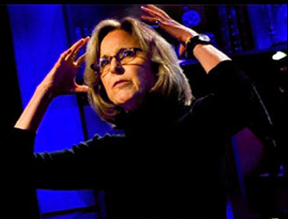
The photo (at top) is of Dr. Fisher presenting at the 2008 TED conference in Long Beach, CA.

Opportunity is missed by most people because it is dressed in overalls and looks like work.”

– Thomas Edison

Who cares if my glass is half empty or half full; I still have something to drink.”

– Optimism rules

They who give have all things. They who withhold have nothing.”

– Hindu Proverb

Education is not the filling of a pail, but the lighting of a fire.”

– William Butler Yeats

Promise me you’ll always remember: You’re braver than you believe, and stronger than you seem, and smarter than you think.”

– Christopher Robin to Pooh

A discovery is said to be an accident meeting a prepared mind.”

– Albert Szent-Gyorgyi

The best hobbies are the ones that take us furthest from our primary occupation.”

– Dr. Evelyn Vogel, Dexter

Always look at what you have left. Never look at what you have lost.”

– Robert H. Schuller

It is easier to fight for one’s principles than to live up to them.”

– Alfred Adler

You don’t love someone because of their looks or their clothes or their car. You love them because they sing a song only your heart can understand.”

– L.J. Smith

A diamond is a lump of coal that stuck with it.”

– Norwegian proverb

Entrepreneurs are willing to roll the dice with their money or reputation on the line in support of an idea or enterprise.”

– Victor Kiam

Hope sees the invisible, feels the intangible, and achieves the impossible.”

– Helen Keller

The curious paradox is that when I accept myself just as I am, then I can change.”

– Carl Rogers

The mind is everything. What you think, you become.”

– Buddha

Success is about finding a livelihood that brings joy, self-sufficiency, and a sense of contributing.”

– Anita Roddick

The world I believed in, back in my most innocent, uninformed, childish mind—is real.”

– Martha Beck

With ordinary talents and extraordinary perseverance, all things are attainable.”

– Sir Thomas Fowell Buxton

‎That which grows fast withers as rapidly; that which grows slowly endures.”

– J.G. Holland, novelist

Be bold and mighty forces will come to your aid.”

– Basil King

The follow-your-gut mentality of the entrepreneur has the potential to take you anywhere you want to go or run you right out of business.”

– Bill Rancic, "The Apprentice"

I may not be able to change what takes place, but I can always choose to change my thinking.”

– Michelle Sedas

No one is useless in this world who lightens the burden of another.”

– Charles Dickens

The person who makes a success of living is the one who see his goal steadily and aims for it unswervingly. That is dedication.”

– Cecil B. DeMille

As your desire is, so is your will. As your will is, so is your deed. As your deed is, so is your destiny.”

– Brihadaranyaka Upanishad

The best reason to start an organization is to create a product or service to make the world a better place.”

– Guy Kawasaki

History is a relentless master. It has no present, only the past rushing into the future. To try to hold fast is to be swept aside.”

– John F. Kennedy

The good ideas are all hammered out in agony by individuals, not spewed out by groups.”

– Charles Brower, Advertising Hall of Fame

A man without a smiling face
 should not open a shop.”

– Chinese Proverb

Do you have the desire to create something new; the strength of conviction to believe your creation will be successful, and the reservoir of energy necessary to thrust it into the marketplace?”

– Steven Schussler

When I dare to be powerful—to use my strength in the service of my vision, then it becomes less and less important whether I am afraid.”

– Audre Lorde

Think of yourself as on the threshold of unparalleled success. A whole, clear, glorious life lies before you. Achieve! Achieve!”

– Andrew Carnegie

The real voyage of discovery consists not in seeking new lands, but in seeing with new eyes.”

– Marcel Proust

If you wish success in life, make perseverance your bosom friend, experience your wise counselor, caution your elder brother, and hope your guardian genius.”

– Joseph Addison

In the middle of difficulty lies opportunity.”

– Albert Einstein

Twenty years from now you will be more disappointed by the things that you didn’t do than by the ones you did do.”

– Mark Twain

If you were independently wealthy and never had to work a day in your life, would you still choose to spend your time attempting to become a successful entrepreneur?”

– Steven Schussler

Don’t wait for someone else to lead you to your right life; that privilege—and responsibility—is yours alone.”

– Martha Beck

The biggest flaw in our existing theory of capitalism lies in its misrepresentation of human nature.”

– Muhammad Yunus

We are not meant to resolve all contradictions, but to live with them and rise above them.”

– William Blake

Think of yourself as on the threshold of unparalleled success. A whole, clear, glorious life lies before you. Achieve! Achieve!”

– Andrew Carnegie

There is only one success – to be able to spend your life in your own way.”

– Christopher Morley

If you do not tell the truth about yourself
, you cannot tell it about other people.”

– Virginia Woolf

If you limit your choices only to what seems possible or reasonable, you disconnect yourself from what you truly want, and all that is left is compromise.”

– Robert Fritz

No longer talk at all about the kind of man a good man ought to be, but be such.”

– Marcus Aurelius Antoninus

Education is the ability to listen to almost anything without losing your temper or your self-confidence.”

– Robert Frost

You take your life in your own hands, and what happens?
 A terrible thing: no one to blame.”

– Erica Jong

That which grows fast withers as rapidly; that which grows slowly endures.”

– J.G. Holland, novelist

Confidence is the most important thing you can teach someone… if you can teach them confidence, you don’t have to teach them anything else.”

– Vin Diesel

Women once had the goal of being Superwoman; I think most of us now simply strive to have a super day.”

– Author, Activist Lee Woodruff

Be Inkandescent Magazine's Back Issues

Don’t miss the great advice our entrepreneurs have offered in the past. Click below to view our back issues.