• December 2013

Are You Happy?

Spontaneous Happiness. It’s a concept that most entrepreneurs aim for daily, for that likely means that their business is swimming along, their employees are happy, their families are grinning, and life in general is dandy.

But how happy are you—really? Finding a way to increase your happiness quotient starts with understanding what Dr. Andrew Weil calls your emotional sea level. “This is not happiness, but rather contentment and the calm acceptance that is the goal of many kinds of spiritual practice,” explains the man who is considered the father of integrative medicine. “From this perspective, it is possible to accept life in its totality, both the good and bad, and know that everything is all right, just as it should be, including you and your place in the world.”

Scroll down for our Q&A with the good doctor, whose insights into achieving emotional well-being will inspire you and hopefully help make your holiday season that much more enjoyable!

And be sure to read our feature on his brand new book, “True Food: Seasonal, Sustainable, Simple, Pure.” With restauranteur Sam Fox and Chef Michael Stebner, this cookbook features 125 recipes from the trio’s hot restaurant, of which there are seven—in Arizona, Colorado, California, and Texas. Which recipes are Dr. Weil’s favorites? Click here for two of his tasty, good-for-you treats.

Also in the December 2013 edition of Be Inkandescent:

  • An update on Truly Amazing Woman Dr. Esther Sternberg. Our Entrepreneur of the Month in the June 2012 issue of BeInkandescent.com, she shared insights into the business of healing yourself. The popular author is now the director of research at Dr. Weil’s Arizona Center for Integrative Medicine. How has her life changed since leaving Washington, DC, for Tuscon? And how is she working with the Pope?
  • And because good health is on our minds, we think you’ll be interested in the innovative Wellness Workup—by MyHolisticDocs.com Drs. Kim and Scott Muzinski—offered at the Integrative Chiropractic & Natural Medicine Clinic in Arlington, VA. “A simple blood test can give you tremendous insight into the health of your body—and assist you in making smart food and exercise changes that can change your life,” says Dr. Kim.

  • Want a little slice of heaven? You won’t want to miss Pie-ography, a recipe / biography book by “Where Women Cook” publisher Jo Packham. It includes 42 fabulous recipes inspired by 39 extraordinary cooks, including Doesn’t a Midsummer Night’s Dream Pie sound divine? by Michele Muska. Her pie landed on the cover of “Pie-ography.” Don’t miss our sweet and savory interview.

As our holiday gift to you, we share one spectacular idea from “Spontaneous Happiness”: Make a list of the people in your life in whose company you feel more optimistic, more positive, more cheerful, and less anxious. Resolve to spend more time with them this holiday season—and throughout 2014. In fact, make a date with one of them this week!

Wishing you and yours joy, peace, and oodles of spontaneous happiness. — Hope Katz Gibbs, publisher, Be Inkandescent magazine. • founder, Inkandescent Public Relations

Mind-Body Expert Dr. Andrew Weil Teaches Us How to Harness "Spontaneous Happiness"

DECEMBER 2013: ARE YOU READY FOR A LIFE LIFT?

By Hope Katz Gibbs Be Inkandescent

Dr. Andrew Weil is a world-renowned leader and pioneer in the field of integrative medicine—a healing-oriented approach to health care that encompasses body, mind, and spirit. A Harvard University-trained doctor, he is the founder and director of the Arizona Center for Integrative Medicine at the University of Arizona’s Health Sciences Center.

Dr. Weil is also the author of 14 books, including 8 Weeks to Optimum Health, and Healthy Aging.

We’ve been fans of the mind-body connection doctor since the 1990s, and we think you’ll be as fascinated as we are to get firsthand insights into one of his latest books, “Spontaneous Happiness.” Scroll down to read our Q&A. And click here to listen to our interview with Dr. Weil on the Inkandescent Radio Network.


Dr. Andrew Weil on the Art and Science of Creating Spontaneous Happiness

Be Inkandescent: In “Spontaneous Happiness,” you are honest about what it means to be happy—and how in America our culture is obsessed with the unrealistic notion of feeling blissful all the time. You also share that there have been moments in your life when you felt very sad, depressed even. Why is depression such a problem for so many Americans—and why, without trying alternative therapies, do the masses rush to take medication to brighten their moods?

Andrew Weil: I think most people think of happiness as something that comes when you get something that you don’t have, something from outside, whether it’s a new car or a better job. I don’t think that’s the way it works. I think what you really want to strive for is contentment, which is an inner feeling of being complete and whole and satisfied, regardless of what your external circumstances are.

First of all, moods are supposed to vary. We’re not supposed to be happy all the time. There are highs and lows, just as there are variations from everything in nature. And so the neutral point is not happiness. I think it’s a place where you feel comfort, contentment, balance, wholeness. And I think you want to cultivate that feeling more and more. And then it’s okay if you go up above that or below it. You don’t want to have huge swings and you don’t want to get stuck in the depth. But I think it’s good to accept the normal variations of mood.

Be Inkandescent: You have drawn a lot on Eastern psychology, especially Buddhist psychology, which offers many insights into the mind and what the goal should be.

Andrew Weil: Right. And I’ve also looked at Western psychology and the strategies that are available to help people. In addition, my work on integrative medicine has made me aware of lifestyle factors that affect our mental and emotional well-being. That includes how we eat, how we exercise, how we rest and sleep, a whole range of choices we make.

Be Inkandescent: The heart of the book has very practical tips. In fact, you help readers assess their emotional well-being, you offer advice on lifestyle, behavior, and dietary changes that will make you feel better. Can you give us some tips that our listeners and readers can apply today?

Andrew Weil: Sure. The strongest scientific evidence we have for physical interventions are for regular physical activity, both as a treatment and preventive for depression, and also for the use of supplemental fish oil. I recommend two to four grams a day for optimum brain health and mood health. On the mental level, I think there are a whole lot of things we can do.

One is to choose wisely what we expose ourselves to. If you constantly listen to sad music and read sad novels and watch sad programs on TV, chances are you will be sad. So you can make choices about that. And moods are contagious, so it is good to spend time in the company of people who make you feel optimistic and positive.

There is also a section on spiritual techniques, because there’s a great deal of evidence that gratitude can boost mood. Having gratitude for your blessings is so easy. You just have to remember to be grateful for things. Keeping a gratitude journal is an easy way to keep this list. Just get a little notebook, keep it by your bed, and during the day make mental notes of things you’re grateful for—it could be as simple as the rising of the sun or seeing a flower—and when you go to bed just jot these down. Doing that for one week can boost mood for up to several months.

Don’t stop now! Click here to read more of our Q&A with Dr. Andrew Weil in Tips for Entrepreneurs.

Dr. Andrew Weil's Tips for Achieving Emotional Well-Being

DECEMBER 2013: TIPS FOR ENTREPRENEURS

Be Inkandescent’s Q&A with Dr. Andrew Weil, author of, “Spontaneous Happiness”

Are you seeking happiness? “I observe that many people are,” says Dr. Andrew Weil. “They imagine it will come to them if they get a raise, a new car, a new lover, or something else they want but do not have. My own experience, repeated many times, is that the actual emotional reward of getting and having is usually much less than the one imagined.”

Which is why he penned, “Spontaneous Happiness,” he says. The book offers more than 250 pages of recommendations to help us create an internal state of well-being that is relatively impervious to life’s transient ups and downs, and independent of what you have and don’t have.

What’s amazing to Dr. Weil is that one in 10 Americans—including children—are taking antidepressant drugs. The World Health Organization predicts that by the year 2030, more people worldwide will be affected by depression than by any other health condition.

Dr. Weil, who has struggled with moderate depression himself through midlife, investigates how we got here, what we can do outside of traditional medicine to start feeling more content, and how we can sustain this contentment through life’s inevitable dark patches.

In “Spontaneous Happiness,” he explains how, scientifically, emotionally, and spiritually, humans have the innate ability to achieve positive emotions without external agencies—a process he calls spontaneous because it is a natural one that does not rely on drugs or other medicines.

Scroll down for our Q&A, and click here for Dr. Weil’s 8-Week Plan to a Lifetime of Emotional Well-Being.


Be Inkandescent: What we love most about your book is the practical advice that you offer — including some affordable herbal remedies, that fact that exposure to light is really important, and simple breathing techniques to alleviate anxiety. Can you touch a little bit about each of these?

Dr. Andrew Weil: I think it is very important to get some exposure to bright light during the day as well to sleep in complete darkness. That’s a way of regulating our sleep-wake cycles, which are essential to good well-being. The most familiar herbal remedy is St. John’s Wort, and there’s good scientific evidence that this is quite useful for mild to moderate depression. It takes a while to work, there are some cautions about it, but generally it is safe and effective. I give specifics in the book on how to use that.

By the way, two other supplements are especially useful. One is vitamin D; it’s very important to get your vitamin D levels checked and to supplement to bring them up if they are low. There’s also a remedy called SAM-e. This is not herbal but it’s a dietary supplement that works quickly. It also has a benefit of alleviating pain of osteoarthritis. For people who are stressed and have muscular pain, it’s a good choice.

The breathing technique is a favorite subject of mine. I teach all patients simple breathing exercises. This draws on yoga philosophy. But regulation of breath is a very powerful technique to affect emotions. It’s impossible to be anxious, upset, angry, if you are breathing deeply, slowly, quietly, and regularly. So that gives you a method of controlling your emotional state at the very start of feeling anxious or upset. If you make your breathing deep, slow, quiet, and regular you can shut that off.

Be Inkandescent: Let’s step back a bit. Tell us—what inspired you to write this book?

Dr. Andrew Weil: I’m very alarmed at the completely reckless use of antidepressant medication in our culture today. I think one in 10 adults now are taking antidepressants. One in four of us are on psychiatric medication of some kind, including lots of kids. We have no idea what these drugs do to developing brains.

The pharmaceutical industry has been very successful in convincing people that ordinary states of sadness are matters of unbalanced brain chemistry that need to be treated with drugs. All of that has made me very concerned, and I wanted to give people practical alternatives to taking those medications—and instructions on how to get off them if you are on them.

They have their uses. There are certainly people with severe depression would do well on antidepressant drugs. But even then I would use them for a limited period, say up to a year, and then find ways to maintain improvement in other ways.

And I think there’s an awful lot of discontent in our society, as well as a lot of unreasonable cultural expectations—and this is going to be really strong as the holidays approach—that we are supposed to be happy all the time. That’s just not what human beings are. So I think coming to terms with our moods and learning simple strategies for maintaining that emotional sea level are very important. There’s just a lot of useful information that most people don’t know.

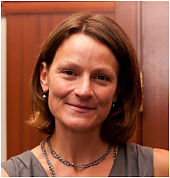
Be Inkandescent: Tell us more about the Arizona Center for Integrative Medicine. We’re huge fans of your research director, Dr. Esther Sternberg (pictured right), who was our Entrepreneur of the Month in June 2012, talking about “The Business of Healing Yourself.” She inspired us to connect with you for this issue. So tell us more about your Center.

Dr. Andrew Weil: Our major focus has been education. We train physicians, nurse practitioners, medical residents, and medical students in integrative medicine, which is this new system that incorporates alternative medicine, natural therapies, with standard medicine.

We’ve now graduated more than a thousand physicians from very intensive two-year trainings. In addition, we offer an integrated medicine clinic in Phoenix. It’s a primary care clinic that’s delivering this kind of medicine to increasing numbers of patients.

We do active research, which Dr. Sternberg is conducting and directing. And I would say we are the leading center in the world for training people in this new system, which I very firmly believe, is the future of healthcare.

Be Inkandescent: We also want to talk about your newest book, “True Food: Seasonal, Sustainable, Simple, Pure,” which also marks your foray into the restaurant business. The book features more than 125 recipes for the fresh, flavorful, healthy dishes you serve at your True Food Kitchen locations, of which there are currently seven — in Arizona, California, Colorado, and Texas. And it’s our featured article in our December 2013 Restaurant column, where we share two of your healthy, delicious recipes.

Dr. Andrew Weil: This is based on my philosophy of an anti-inflammatory diet, which figures prominently in, “Spontaneous Happiness.” There is evidence that uncontrolled inflammation of the body, which is the root of many chronic diseases, is also correlated with depression. And therefore following an anti-inflammatory diet is a very good strategy for both preventing and treating depression.

This is a way of eating based on the Mediterranean diet. I’ve added Asian influences to it. It in no way deprives you of pleasure, and I think the success of these kitchen restaurants shows that people love this kind of food, and the cookbook gives many recipes that are based on this philosophy.

Be Inkandescent: What are some of your favorite recipes?

Dr. Andrew Weil: There’s a kale salad that is one of the most popular and is a traditional Italian dish actually. There’s also a vegan curry cauliflower soup, which I invented and is terrific hot or cold. Click here to view those, and more.

Be Inkandescent: Let’s talk a little bit about the adventure of getting into the restaurant business. You said it began in 2007 when your business partner, Richard Baxter, arranged a meeting with third-generation restaurateur Sam Fox. Tell us about that.

Dr. Andrew Weil: I’m a very good home cook and I’ve developed my skills over the years. I make really good food, I’ve invented a lot of recipes, and many people over the years have said, “You ought to open a restaurant!” I was smart enough to know that I knew nothing about the restaurant business and that it was a very tough business. But eventually I had the chance to meet a very successful restaurateur, Sam Fox.

I told him that I thought nobody had tried to bring together the worlds of good nutrition and fine dining and I proposed this concept to him. But he didn’t get it. He said health food doesn’t sell. And I think he just thought I was talking about tofu and sprouts. So I invited him and his wife to my house and I cooked for them. He liked the food and his wheels began turning.

He said he was willing to give it a try but was very skeptical. He found a chef from one of his restaurants, Michael Fender, who I was able to work with pretty well. We created these menus. The first restaurant opened in Phoenix. It was wildly successful from Day One. We now have six, including locations in Colorado and California. There’s a seventh opening in Dallas next month. pretty soon we’ll have restaurants in many locations around the country.

Be Inkandescent: What else is on the horizon for you? What other books are you working on?

Dr. Andrew Weil: I’m actually doing a second cookbook now because there was a lot of demand from people for really simple, quick recipes. I constantly hear that people don’t have time to cook, that it’s intimidating, and too hard. It’s ironic that the sales of cookbooks are at an all time high and more people are watching cooking shows on TV than ever, but at the same time, fewer people than ever are cooking.

So it seems as if cooking has become an entertainment more than something you actually do. So I want to compile a book that gives recipes that can be made in 30 minutes or less and that also conform with the principles of the anti-inflammatory diet. So the new book will be, “True Food: Quick and Easy.”

Be Inkandescent: Before you go, tell us: What is the one big message you want people to take away, not from just these books, but from all of your work in general?

Dr. Andrew Weil: That lifestyle factors under your control are the major determinants of health—how you age, how you move through the world with your mood. And just by learning some of these simple principles—how to eat and how to improve your body with the proper rest and sleep, how to reduce the harmful effects of stress—if you put these things into practice you can save yourself a lot of trouble and money and visits to doctors. And you can go through life in a state of good health, physical and mental.

For more information on Dr. Weil’s book and restaurant, visit www.spontaneoushappiness.com, and www.truefoodkitchen.com.

To listen to our podcast interview with Dr. Andrew Weil, visit the Entrepreneur Radio Show on the Inkandescent Radio Network.

Speaking more than one language is no longer just an asset in today’s job market; it is a requirement.”

– Tom Adams, CEO, Rosetta Stone

It is not the strongest of the species that survives, nor the most intelligent, but the one most responsive to change.”

– Charles Darwin

There are risks and costs to a program of action. But they are far less than the long-range risks and costs of comfortable inaction.”

– JFK

I can’t go back to yesterday—because I was a different person then.”

– Lewis Carroll

A person who learns to juggle six balls will be more skilled than the person who never tries to juggle more than three.”

– Marilyn vos Savant

Spend the afternoon. You can’t take it with you.”

– Annie Dillard

Have the courage to follow your heart and intuition. They somehow know what you truly want to become.”

– Steve Jobs

Part of your destiny is to live in the zone of maximum satisfaction.”

– Martha Beck

Whatever you do may seem insignificant, but it is most important that you do it.”

– Gandi

Only those who will risk going too far can possibly find out how far one can go.”

– T.S. Eliot

You often meet your fate on the road you take to avoid it.”

– Goldie Hawn

Traveling is one way of lengthening life, at least in appearance.”

– Benjamin Franklin

The awakening to the mystery of life is a revolutionary event; in it an old world is destroyed so that a new and better one may take its place.”

– J.J. Van Der Leeuw, The Conquest of Illusion

We need to learn to set our course by the stars, not by the lights of every passing ship.”

– General Omar Bradley

Anything not worth doing well is not worth doing.”

– Warren Buffett

Luck is what happens when preparation meets opportunity.”

– Seneca

The gem cannot be polished without friction; nor man perfected without trials.”

– Chinese proverb

Hope sees the invisible, feels the intangible, and achieves the impossible.”

– Helen Keller

I’ve come to confirm that one’s title, even that of president, says little about how well one’s life has been led. No matter how much you’ve done, or how successful you’ve been, there’s always more to do, to learn, and to achieve.”

– Barack Obama

Sometimes the dreams that come true are the dreams you never even knew you had.”

– Alice Sebold, The Lovely Bones

The man who acquires the ability to take full possession of his own mind may take possession of anything else to which he is justly entitled.”

– Andrew Carnegie

Find somebody to be successful for. Raise their hopes. Think of their needs.”

– Barack Obama

Ambition is the germ from which all growth of nobleness proceeds.”

– Thomas Dunn

In the middle of difficulty lies opportunity.”

– Albert Einstein

A man is a success if he gets up in the morning and goes to bed at night and in between does what he wants to do.”

– Bob Dylan

If you do not tell the truth about yourself
, you cannot tell it about other people.”

– Virginia Woolf

You may ask me for anything you like except time.”

– Napoleon

The mind is everything. What you think, you become.”

– Buddha

I always maintained that the greatest obstacle in life isn’t danger, it’s boredom. The battle against it is responsible for most of the events in the world — good or ill.”

– Dr. Evelyn Vogel, Dexter

The only way to compel men to speak good of us is to do it.”

– Voltaire

Patience and perseverance have a magical effect before which obstacles vanish.”

– John Quincy Adams

Instead of loving your enemies, treat your friends a little better.”

– Edgar W. Howe

We must be willing to let go of the life we have planned so as to have the life that is waiting for us.”

– Joseph Campbell

Acknowledging the good that you already have in your life is the foundation for all abundance.”

– Eckhart Tolle

Never cut what you can untie.”

– Joseph Joubert

Always be on the lookout for the presence of wonder.”

– E.B. White

Always bear in mind that your own resolution to succeed is more important than any one thing.”

– Abraham Lincoln

Look at everything as though you were
seeing it either for the first or last time.
Then your time on earth will be filled with glory.”

– Betty Smith

Always look at what you have left. Never look at what you have lost.”

– Robert H. Schuller

The only dream worth having is to live while you’re alive and die only when you’re dead.”

– Arundhati Roy

We make a living by what we get; we make a life by what we give.”

– Winston Churchill

Be bold and mighty forces will come to your aid.”

– Basil King

No man will make a great leader who wants to do it all himself, or to get all the credit for doing it”

– Andrew Carnegie

Just don’t give up trying to do what you really want to do.
 Where there is love and inspiration, I don’t think you can go wrong.”

– Ella Fitzgerald

When I was younger I thought success was being a star, driving nice cars, having groupies. But today I think the most important thing is to live your life with integrity.

– Ellen DeGeneres

The world I believed in, back in my most innocent, uninformed, childish mind—is real.”

– Martha Beck

To be what we are, and to become what we are capable of becoming, is the only end of life.”

– Robert Louis Stevenson

My task is really not to change myself but to become familiar with who I am.”

– Maureen Cook

But all the while I was alone, the past was close behind, I seen a lot of women, but she never escaped my mind, and I just grew, tangled up in blue.”

– Bob Dylan

Try not to become a man of success but rather try to become a man of value.”

– Albert Einstein

Be Inkandescent Magazine's Back Issues

Don’t miss the great advice our entrepreneurs have offered in the past. Click below to view our back issues.