• June 2015

The Business of Fatherhood

Does being a dad make you a better entrepreneur? That’s one of the questions we tackle in the special Father’s Day issue of Be Inkandescent magazine.

For inspiration, we turn to our newest client, entrepreneur and futurist Michael Vidikan, who runs the Dallas-based futurist think tank www.FutureInFocus.com.

We celebrate the launch of his revamped website this month, which features more than 1,400 briefs on international, corporate, and consumer trends — including business, emerging, generational, and geographic reports.

In this issue, we share three articles on the topic of fatherhood based on Future in Focus briefs:


And in our Tips for Entrepreneurs this month, we share two more research studies:

Also in this issue, you’ll find:

  • Manly Books. In our Book of the Month column this month, you’ll find five tomes about fatherhood, parenting, and manhood — including insights into What Women Really Want in a Man.

  • Craft Beer. If you love great beer, you’ve probably tossed back a bottle or two of Stone Brewing Co.‘s IPA. The #10 largest craft brewery in the nation, Stone generates $185 million in annual sales and employs more than 900 people. Why did Stone decide to open its East Coast plant in Richmond? Don’t miss our interview with the COO and CFO.

Find more perspective on fatherhood in our new column, Inkandescent Quotes, including this one from Dan Pearce, author of the blog Single Dad Laughing: “Saturday mornings, I’ve learned, are a great opportunity for kids to sneak into your bed, fall back asleep, and kick you in the face.”

Cheers to Dads everywhere! — Hope Katz Gibbs, Publisher, Be Inkandescent magazine • Founder, Inkandescent PR

Glimpse the Future of Fatherhood

JUNE 2015: The Changing Face of Fatherhood

Insights from Entrepreneur of the Month Michael Vidikan
President, Future in Focus

By Hope Katz Gibbs, Publisher
Be Inkandescent magazine

What will the next generation of stay-at-home dads look like? How will the Millennials parent differently than their parents and grandparents? And how will the new American grandparents behave?

Answers to those questions can be found on the information-packed website by futurist Michael Vidikan: FutureInFocus.com. A popular subscription-based strategic foresight and consulting firm, Vidikan helps companies see years or even decades into the future to make better long-term decisions today. In fact, there are more than 1,400 briefs that can be accessed when you subscribe.

Clients include ConAgra Foods, GM, The Hershey Company, Nissan, and more.

“I’ve worked with Future in Focus over the past few years, and the trend insights I’ve had access to have helped tremendously with forming our strategic plans,” says Ruth Waters, director of Consumer Insights, Commerical Foods, at ConAgra Foods.

Keiichi Kitahara, senior manager for Advanced Planning and Strategy at Nisssan North America, says, “The insights that Future in Focus provides to me and my team are invaluable. Future In Focus’ reports delve into areas of great interest to any company dealing with product development.”

Vidikan founded the firm in 2014, and this month, the team at InkandescentPR helped him launch his new monthly e-magazine, which will feature a different emerging business and consumer trend in each issue.

Vidikan continues the work previously done by Social Technologies, which was founded in 2000 by futurist Tom Conger. The company was sold in 2009 to Innovaro, a company focused on software and innovation solutions.

A graduate of the MBA program at The George Washington University, Vidikan earned his undergraduate degree in business and psychology.

When he’s not focusing on the future, you can find him experimenting in the kitchen, testing out the latest interactive gaming technologies, or volunteering in his community and raising money for Movember, a global organization committed to changing the face of men’s health. Scroll down for our Q&A with Michael Vidikan.

And be sure to glimpse the future of fatherhood, as seen through three Future in Focus reports, excerpted in this issue of Be Inkandescent:

•  The Next Generation of Stay-at-Home Dads
•  Millennials and Parenting
•  The New American Grandparents


Be Inkandescent: What is the mission of Future in Focus?

Michael Vidikan: Our mission is to help companies and organizations become more informed about the future so they can make better long-term business decisions. The future is always murky, but that doesn’t mean it’s unknowable or that it’s not possible to plan for it. As the name of our company suggests, we want to put the future in focus and provide clarity and direction for organizations as they work to plan for what’s coming next.

Be Inkandescent: For those who don’t know, what does a futurist do?

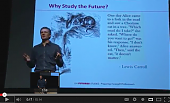
Michael Vidikan: A futurist is someone who presents ideas about what the future might or might not look like. The job involves enormous amounts of reading and research. It’s a lot like doing a puzzle. If you put enough pieces together, you start to see the outline of an image. Good futurists tend to be good historians, because if you want to tell a story about the future, you need to understand how we got to the present. Furthermore, if you can see how quickly a technology is advancing, you can forecast approximately when it will become mainstream and how it will impact various industries. For example, let’s look at self-driving cars. The technology is still years away from mainstream use, and a lot of testing still needs to be done. Based on prototypes in existence today, and the rate at which they are progressing, we can imagine how self-driving cars would disrupt commuting and carpooling down the road. Likewise, if we can understand the psychological and sociological drivers behind emerging human behaviors, we might be able to see how particular demographics or generations make new demands on companies and governments.

Be Inkandescent: What types of trends do you track, and who are your ideal clients?

Michael Vidikan: Our coverage is mostly focused on trends that are consumer-centric and will impact the business community 2-10 years out. We cover a very broad spectrum of consumer and technology trends across many industries and geographies, from research about Millennials’ food preferences to the future of 3D printing in China.

Be Inkandescent: What are some of the trends you report on that surprise you the most?

Michael Vidikan: I’m probably most surprised by the advances in biotechnology. Every day there seems to be a new headline about a discovery that may cure diseases, extend our lives, make us healthier, and improve our performance. There’s a field of researchers who are trying to grow human organs for transplants and manufacture human blood for transfusions. Imagine the lives we could save when those technologies are available.

Be Inkandescent: How can more small businesses use the research you do at Future in Focus?

Michael Vidikan: Some can use the research to see where the market is headed and tailor their products and services to meet the future. Others might want to abandon a doomed industry or market. And of course small advertising or consulting businesses might want to read our research to share with their clients.

Be Inkandescent: How does someone get into the futures business? What type of background / schooling is needed?

Michael Vidikan: There are a few academic programs that offer degrees in Strategic Foresight and Futures Studies. They teach basic principles and methodologies, but many futurists are not classically trained. It’s often just circumstance that leads a person to become a futurist. Many started as researchers or scenario planners, then followed their passion for thinking about the future.

Be Inkandescent: How did you get into the business of being a futurist?

Michael Vidikan: It started during my MBA program. I took a course called “Emerging Technologies: Forecasts & Strategies for the Technology Revolution” by Prof. Bill Halal. I was drawn in by the promise of learning about emerging technologies, such as artificial intelligence, space elevators, cancer-fighting nanobots, and other stuff that sounded like science fiction.

Be Inkandescent: What excites you most about this field?

Michael Vidikan: I learned that if you could plot the history of a technology’s progression, you could map its trajectory going forward and see the potential impact and opportunities it could create. Almost immediately after I finished my MBA, I was given an amazing opportunity to work for Innovaro’s Foresight Research division, helping global companies such as BASF, Hershey’s, and GM understand the future so they could make better long-term decisions. Like my clients, I love reading our reports about emerging consumer and technology trends. It’s live having a crystal ball that’s based in solid research. See for yourself at FutureInFocus.com.

Don’t stop yet! Be sure to check out two more fascinating future-focused reports in this month’s Tips for Entrepreneurs columns:
•  The 2015 Manifesto: Fathers, Sensitivity, and Parenting
•  The Five Types of Men: Which One Are You?

The 2015 Manifesto: Fathers, Sensitivity, and Parenting

High-quality (sensitive/supportive) and substantial father involvement from the month following birth is connected with a range of positive outcomes in babies and toddlers, including higher IQs at 12 months and 3 years, according to a report by the Fatherhood Institute.

In a sample of African-American families, fathers’ authoritarian parenting style (rigid and bossy) was linked with poorer vocabulary and other skills in their children — with the quality of the fathers’ parenting more influential than mothers’.

“School readiness” in young children is associated with high levels of fathers’ sensitivity, in addition to mothers’ sensitivity. Helping fathers as well as mothers to respond to infant cues and develop quality interactions with their babies, toddlers, and preschoolers is very important.

Father-infant bonding is stronger when dads develop their own ways of doing things.

Fathers who exhibit “parental sensitivity” generally function as a supportive presence, respect their children’s autonomy, and exhibit low levels of hostility towards them. This trait is more often found in men who were older when they first became fathers, hold less traditional child-rearing beliefs, and report more intimacy with their children’s mothers (NICHD, 2000).

The kinds of interactions by fathers that have been shown to benefit young children’s development include supportive play, sensitive responses to children’s cues, expanding on what they say, referring to objects and events, eliciting actions, directing attention, prompting play, reading books, and using large vocabularies (Tamis-Le-Monda et al, 2012).

The magnitude of fathers’ influences is equal to and sometimes larger than that of mothers (Tamis-LeMonda et al, 2013). For example, “school readiness” in young children is associated with high levels of paternal sensitivity, over and above mothers’ sensitivity (Campbell & von Stauffenberg, 2008).

Babies whose fathers play a big role in caring for them are generally more sociable (Frascarolo, 2004).

Sensitive and substantial involvement by dads from the month following birth is connected with a range of good outcomes in babies and toddlers (Yarrow et al, 1984; Wachs et al, 1971), including better language development and higher IQs (Yogman et al, 1995; Magill-Evans and Harrison, 1999).

In China, the father’s warmth was found to benefit children’s educational and social adjustment (Chen et al, 2000).

Also in China, a father’s authoritarian parenting style (rigid and bossy) had a more negative impact on his children than authoritarian parenting by mothers (Chen et al, 1997).

Similarly, in the Philippines, fathers’ authoritarian parenting style was found to be linked to their children feeling frustrated and stressed (Esteban, 2006).

Authoritarian parenting by African-American fathers was again found to be more impactful than when mothers were authoritarian, and it was also connected to poorer vocabulary and other skills (Roopnarine et al, 2006).

To support paternal sensitivity:

  • Address myths about fathers’ capabilities with infants and children, so that both fathers and mothers understand that parenting skills and parental sensitivity are learned, not “innate,” and that fathers can learn as quickly as mothers (Myers, 1982).
  • Encourage fathers to go “skin to skin” with their newborns (Erlandsson et al, 2007).
  • Brief interventions such as Brazelton’s Newborn Behavioral Observations — which teach parents to assess their babies’ capabilities, or read infant “cues,” or engage in baby massage — can make a real difference to both the amount of father-infant interaction, and its quality (Sholz & Samuels, 1992; Myers, 1982).
  • Consider using “video playback,” where fathers and their babies are videotaped interacting with each other, and the videotape is then watched by the dad with a trained professional who points out successes in the interactions (Lawrence et al, 2013).
  • Pay attention to “micro-moments” within family routines, for example, encouraging fathers to hold their infants as often as possible, including when out as a family, and to engage in verbal exchanges with their babies when changing and feeding them (Tamis-LeMonda et al, 2013).
  • Encourage fathers to take charge of their infants on their own: Fathers who regularly spend time in sole charge of their babies develop confidence and skills and interact with them in a much wider range of ways than other fathers (Pedersen et al, 1987). This is connected with very good outcomes for children, including higher school grades (Hoffman & Youngblade, 1999).
  • Consider using “Hello Dad,” a superb and inexpensive DVD resource designed to help dads connect with their babies, which can be purchased online from the New South Wales Institute of Psychiatry in Australia. Among other things, this demonstrates to fathers how to engage in “mutual gaze” with their infants, and explains how this assists brain development.

Download a PDF of this research summary:
FI Research Summary: Fathers, Sensitivity,
and Parenting Style.

Patience and perseverance have a magical effect before which obstacles vanish.”

– John Quincy Adams

No man will make a great leader who wants to do it all himself, or to get all the credit for doing it”

– Andrew Carnegie

Your own words are the bricks and mortar
of the dreams you want to realize.
 The words you choose and their use establish the life you experience.”

– Sonia Croquette

You take your life in your own hands, and what happens?
 A terrible thing: no one to blame.”

– Erica Jong

Tell me, what is it you plan to do with your one wild and precious life?”

– Mary Oliver

Be bold and mighty forces will come to your aid.”

– Basil King

If you do work that you love, and the work fulfills you, the rest will come.”

– Oprah Winfrey

Outside of a dog, a book is man’s best friend. Inside of a dog it’s too dark to read.”

– Groucho Marx

4oz tequila + 1oz TripleSec + 2oz lime juice + 1oz simple syrup (sugar=water), 1 cup crushed ice. Shake + dance around the kitchen.

– Avenida Margarita

Once you find something you love to do, be the best at doing it.”

– Debbi Fields, Mrs. Fields Cookies

The best hobbies are the ones that take us furthest from our primary occupation.”

– Dr. Evelyn Vogel, Dexter

Death is to lose the earth you know, for greater knowing; to lose the life you have, for greater life; to leave the friends you loved, for greater loving; to find a land more kind than home, more large than earth.”

– Thomas Wolfe

Never cut what you can untie.”

– Joseph Joubert

Let us seize the day and the opportunity and strive for that greatness of spirit that measures life not by its disappointments but by its possibilities.”

– W.E.B. Du Bois

Always bear in mind that your own resolution to succeed is more important than any one thing.”

– Abraham Lincoln

We never know how high we are
 till we are called to rise;
 And then, if we are true to plan,
 Our statures touch the skies.”

– Emily Dickinson

Entrepreneurs willingly assume responsibility for the success or failure of a venture and are answerable for all its facets.”

– Victor Kiam

Speaking more than one language is no longer just an asset in today’s job market; it is a requirement.”

– Tom Adams, CEO, Rosetta Stone

Instead of loving your enemies, treat your friends a little better.”

– Edgar W. Howe

At the center of your being you have the answer; you know who you are and you know what you want.”

– Lao Tzu

Some things are destined to be—it just takes us a couple of tries
to get there.”

– J.R. Ward, Lover Mine

Don’t sit down and wait for the opportunities to come. Get up and make them!”

– Madam C.J. Walker

Ambition is the germ from which all growth of nobleness proceeds.”

– Thomas Dunn

The aim of life is to live, and to live means to be aware, joyously, drunkenly, serenely, divinely aware.”

– Henry Miller

The goal of Life is to make your heartbeat match the beat of the universe, to match your nature with nature.”

– Joseph Cambell

The great use of life is to spend it on something that will outlast it.”

– William James

‎That which grows fast withers as rapidly; that which grows slowly endures.”

– J.G. Holland, novelist

If you want to be busy, keep trying to be perfect. If you want to be happy, focus on making a difference.”

– Lisa Earle McLeod

I’m not afraid of storms,
for I’m learning to sail my ship.”

– Louisa May Alcott

The only way to compel men to speak good of us is to do it.”

– Voltaire

If it really was a no-brainer to make it on your own in business there’d be millions of no-brained, harebrained individuals quitting their day jobs.”

– Bill Rancic, "The Apprentice"

The mind is everything. What you think, you become.”

– Buddha

They who give have all things. They who withhold have nothing.”

– Hindu Proverb

If you would create something,
 you must be something.”

– Johann Wolfgang von Goethe

There is only one success – to be able to spend your life in your own way.”

– Christopher Morley

If my mind can conceive it, and my heart can believe it, I know I can achieve it.”

– Jesse Jackson

We are not meant to resolve all contradictions, but to live with them and rise above them.”

– William Blake

Many people prefer to play it safe when it comes to business matters. Are you willing to take risks in the pursuit of entrepreneurial success?”

– Steven Schussler

Our deepest wishes are whispers of our authentic selves. We must learn to respect them. We must learn to listen.”

– Sarah Ban Breathnach

Spend the afternoon. You can’t take it with you.”

– Annie Dillard

Never never never never give up.”

– Winston Churchill

No one is useless in this world who lightens the burden of another.”

– Charles Dickens

Do one thing every day that scares you.”

– Eleanor Roosevelt

How do you stay resilient? It’s about momentum. Like riding a bicycle. If you stop you fall over. So I keep pedaling.”

– Diane Lane

I will pay more for the ability to deal with people than any other ability under the sun.”

– John D. Rockefeller

Who cares if my glass is half empty or half full; I still have something to drink.”

– Optimism rules

You can only become truly accomplished at something you love. Don’t make money your goal. Instead, pursue the things you love doing.”

– Maya Angelou

You must have chaos within you, to create a dancing star.”

– Frederic Nietzsche

Women once had the goal of being Superwoman; I think most of us now simply strive to have a super day.”

– Author, Activist Lee Woodruff

Think of yourself as on the threshold of unparalleled success. A whole, clear, glorious life lies before you. Achieve! Achieve!”

– Andrew Carnegie

Be Inkandescent Magazine's Back Issues

Don’t miss the great advice our entrepreneurs have offered in the past. Click below to view our back issues.