• May 2010

What does it mean to be a social entrepreneur?

Welcome to the May issue of Be Inkandescent Magazine: The ezine for entrepreneurs, by entrepreneurs.

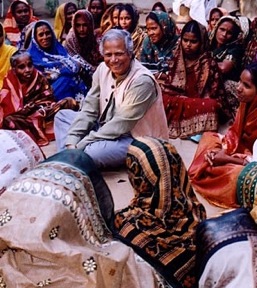
In this issue you’ll meet microfinance guru Dr. Muhammad Yunus. We are honored to feature him, for anyone who understands the importance of micro-lending as a means to end global poverty considers him to be one of the great entrepreneurs of our day.

The 2006 Nobel Peace Prize winner, Dr. Yunus is the founder of Grameen Bank, which provides poor people — mainly women — with small loans that they use to launch businesses that lift their families out of poverty. He is also the director emeritis of the Grameen Foundation, which was founded in 1997 by friends of Grameen Bank to help microfinance practitioners and spread the Grameen philosophy worldwide.

Read on to learn about his newest idea, Building Social Business, which is the title of his 2010 book. If you like what you read, meet him in person — for throughout May he’ll be touring the country promoting his ideas. (Scroll down for a list of dates and cities where he’ll be speaking.)

Also in this issue of Be Inkandescent Magazine: You’ll find that each of our Inkandescent columnists has woven the concept of social entrepreneurship into their articles this month:

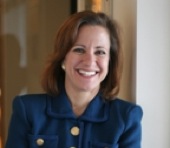
You’ll also find a feature on Muhammad Yunus’ daughter Monica Yunus, who is a rising star on the opera scene and a social entrepreneur herself.

Here’s to incorporating social business ideas into your work and life!Hope Katz Gibbs, publisher, Be Inkandescent Magazine

Muhammad Yunus Teaches Us How to To Build A Social Business

MAY 2010 ENTREPRENEUR OF THE MONTH

Muhammad Yunus, Social Entrepreneur

Article by Hope Katz Gibbs

WHO HE IS: The Banker to the Poor

A native of Bangladesh, Dr. Muhammad Yunus was educated at Dhaka University and was awarded a Fulbright scholarship to study economics at Vanderbilt University. In 1972, he became head of the economics department at Chittagong University.

He then served as chairman of the economics department at Chittagong University before dedicating his life to providing financial and social services to the poorest of the poor.

Former President Jimmy Carter says of Dr. Yunus’ work: “By giving poor people the power to help themselves, Dr. Yunus has offered them something far more valuable than a plate of food — security in the most fundamental form.”

WHAT HE DOES: Teaches entrepreneurs and others how to build social businesses

In his 2010 book, “Building Social Business: The New Kind of Capitalism that Serves Humanity’s Most Pressing Needs,” Dr. Yunus draws on his previous books to show how social business has gone from being a theory to an inspiring practice.

“The biggest flaw in our existing theory of capitalism lies in its misrepresentation of human nature,” Dr. Yunus explains. “In the present interpretation of capitalism, human beings engaged in business are portrayed as one-dimensional beings whose only mission is to maximize profit. Humans supposedly pursue this economic goal in a single-minded fashion.”

“This is a badly distorted picture of a human being,” he insists.

“As even a moment’s reflection suggests, human beings are not moneymaking robots,” he believes. “The essential fact about humans is that they are multidimensional beings.”

“Their happiness comes from many sources, not just from making money. And yet, economists have built their whole theory of business on the assumption that we do nothing in our economic lives besides pursue selfish interests. This interpretation denies any role to other aspects of life — political, social, emotional, spiritual, environmental, and so on.”

Leading corporations including BASF, Intel, Veolia, Adidas and DANONE (known as Dannon in the US), are taking heed. Each has embraced Yunus’ idea to create self-sufficient, community-serving business projects — and they are already making a difference in the lives of people around the world.

The global yogurt company DANONE, for instance, has established a partnership with Grameen to produce vitamins and nutrient-rich yogurt blends for the poor and malnourished in India and Bangladesh. Dr. Yunus’ next challenge to DANONE is to create fiber-rich edible cups to put that yogurt in so there’s no waste and the consumer gets even healthier, nourishing food.

Veolia is working to give poor communities access to potable water, and Cure2Children is focused on discovering treatments for rare cancers and blood diseases in children around the world.

The fact that these companies can find creative solutions to problems that plague much of the world does not surprise Dr. Yunus.

“The world today is in possession of amazingly powerful technologies,” he says. “But almost all of this technology is owned and controlled by profit-making businesses. So often, all they use this technology for is to make more money, because that is the mandate their shareholders have given them.”

“Yet viewed more broadly, technology is simply a kind of vehicle,” he adds. “One can drive it to any desired destination. If somebody decides to use it to end poverty, it will take the owner in that direction. If another owner wants to use it to end diseases, the technology will go there. The choice is ours.”

WHY HE DOES IT: Dr. Yunus is determined to “Create a World Without Poverty”

In 2009, Yunus was touring the world to promote another book, “Creating a World Without Poverty,” which outlines his vision for a new business model that combines the power of free markets with the quest for a more humane world.

“In the last two decades, free markets have swept the globe, bringing with them enormous potential for positive change,” Dr. Yunus explained. “But traditional capitalism cannot solve problems like inequality and poverty, because it is hampered by a narrow view of human nature in which people are one-dimensional beings concerned only with profit,” he says.

“Human beings have many other drives and passions, including the spiritual, the social, and the altruistic. Welcome to the world of social business, where the creative vision of the entrepreneur is applied to today’s most serious problems: feeding the poor, housing the homeless, healing the sick, and protecting the planet.”

Indeed, “Creating a World Without Poverty” tells the stories of some of the earliest examples of social businesses, including Yunus’ own Grameen Bank, and reveals the next phase in a hopeful economic and social revolution that is already under way. His goal: to create a worldwide effort to eliminate poverty by unleashing the productive energy of every human being.

“Dr. Yunus goes beyond microcredit to pioneer the idea of social business—a completely new way to use the creative vibrancy of business to tackle social problems from poverty and pollution to inadequate health care and lack of education,” says Perry Hooks, president of Hooks Book Events, who helped bring Yunus to DC and donated a portion of ticket sales to the Grameen Foundation. “This is a worldwide effort to eliminate poverty by unleashing the productive energy of every human being. I am honored to be able to bring Dr. Yunus to Washington, DC, and host this important event.”

View Dr. Yunus’ appearance in Washington, DC, on February 4, 2009 when C-SPAN BOOKS aired the hour-long speech that he gave at the Lisner Auditorium on the campus of the George Washington University. Click here to watch.

FOR MORE INFORMATION

Learn more about Dr. Yunus, the Grameen Bank, and the Grameen Foundation by visiting www.grameenfoundation.org.

Click here to read Yunus’ Tips for Entrepreneurs.

Dr. Muhammad Yunus teaches us how to build a social business

Five lessons the social entrepreneur has learned in his efforts to help the world discover a new kind of capitalism

By Hope Katz Gibbs

In his 2007 New York Times bestseller, Creating a World
Without Poverty,
Dr. Muhammad Yunus said that a social business must be at least as well managed as any profit-maximizing business.

And with his new book, Building Social Business: The New Kind of Capitalism that Serves Humanity’s Most Pressing Needs, he shares his experience creating Grameen Danone (the yogurt company, which is known as Dannon in the US).

In the 226-page hardback, published by Public Affairs Books, Dr. Yunus explains that the challenge of creating Grameen Danone has not been made any easier by its status as a social business — if anything, just the opposite has been true.

“It is difficult to design a business that generates strong and growing sales of a useful product, so that the business can sustain itself,” he shares. “It is also quite difficult to design an organization that provides a clear, measurable benefit to society or to a significant segment of society — for example, better nutrition for the poor. It is even more difficult to design a social business that does both things at the same time.”

GOD IS IN THE DETAILS,” Dr. Yunus believes

Those words were his advice to readers in Creating a World Without Poverty, and highly applicable, he shares, when it came to building Grameen Danone. In an effort to help others trying to create a social business — actually any business at all — he offers details about the five lessons he has learned.

1. Be flexible, yet never lose sight of your central goal.

Dr. Yunus says it was necessary to make changes in the business design with Grameen Danone, despite the fact that analysts spent months planning before ground was broken on the factory or a single cup was produced. “Life is just too complicated for anyone, no matter how farsighted, to predict every contingency,” he believes.

His advice: “Don’t be afraid to adjust your business plan when circumstances make it necessary. But to avoid becoming purely reactive, flitting from one program to the next, always remember the central goal for which you established the social business in the first place.”

2. Immerse yourself in the culture of the people you intend to serve.

“As every businessperson knows, understanding your customer is one of the indispensable keys to success,” Dr. Yunus explains. “And this means, among other things, understanding and empathizing with the culture of the people you serve: their values, dreams, desires, fears, aversions, likes, and dislikes.”

This is even more important when you build a social business, he adds, for the “do-gooders” drawn to this concept are impatient with weaknesses and flaws of the people they are trying to serve.

“When you ask, ‘what’s the matter with these people — why don’t they appreciate the things I’m doing for them?’” he says, “it’s a sign you are wandering down the wrong path. Stop and rethink your plan.”

3. Use help from allies wherever you may find them.

“As I have always said, human beings have a natural desire to help one another,” Dr. Yunus explains. “It’s a motivating force that is just as powerful as the desire for profit. Social business taps and satisfies this desire to do good.”

“Therefore,” he adds, “those who are building social businesses should not be surprised when they encounter people in unlikely places who want to help — nor should they be shy about accepting the support when it is offered.”

4. Take advantage of differing opportunities in different markets.

It’s important for a social business to be financially sustaining, Dr. Yunus emphasizes. While Grameen Danone is on its way to achieving that goal, “this might not be the case if it had insisted on seeing all its potential customers through the same lens.”

So while Grameen Bank’s experience has been in dealing with rural poor women, and since the worst problems with poverty exist in rural areas among the poor, Grameen Danone found its best approach was to tackle that market — as well as the needy in cities. But they market the product differently to each group.

“In the city, it can sell yogurt at a price that is slightly higher, but still affordable to the urban poor, building sales and production volume while generating profits to subsidize the less-affluent rural market,” he says. “Though very different, the two markets support one another and work together to make Grameen Danone a stronger, more sustainable business.”

5. Question your own assumptions.

Dr. Yunus explains that initially, Grameen Danone’s nutritionists thought that a serving of 80 grams of yogurt was needed to deliver the high dose of micronutrients or children would reject its taste. But a milk crisis caused them to reconsider, and as a result they found a smaller serving could be equally nutritious and delicious.

“If you are trying to build a social business, you should periodically look back at the assumptions you’ve made and consider whether they are still valid,” Dr. Yunus insists. “You may find that circumstances have changed or that your initial beliefs were simply wrong — which may open up new opportunities you never dreamed existed.”

Praise for Muhammad Yunus

“[Yunus’] ideas have already had a great impact on the Third World, and … hearing his appeal for a ‘poverty-free world’ from the source itself can be as stirring as that all-American myth of bootstrap success.” — The Washington Post

“Muhammad Yunus is a practical visionary who has improved the lives of millions of people in his native Bangladesh and elsewhere in the world.” — Los Angeles Times

“The [Grameen Bank] has become a mecca for development economists and is being copied around the world.” — The Economist

“It’s not just Yunus’ theories [Peter] Drucker would have admired; above all, it’s his effectiveness … See for yourself. Check out Yunus’ [books]. Not only are they inspirational, they are highly informational — fantastic case studies on how to manage a business the right way.” — Rick Wartzman, BusinessWeek

To buy your copy of “Building Social Business,” click here.

Learn more: Tips from Dr. Yunus, above, are based on details in Chapter 2, “Lessons from Three Tumultuous Years,” pages 49-53, in “Building Social Business.”

About the Grameen Foundation

Muhammad Yunus is the Director, Emeritus, of the Grameen Foundation, a nonprofit organization headquartered in Washington, DC, with an office in Seattle, Washington. It was founded in 1997 by friends of Grameen Bank to help microfinance practitioners and spread the Grameen philosophy worldwide.

“We share the ideas of 2006 Nobel Peace Laureate Muhammad Yunus, but the Grameen Foundation and Grameen Bank are independent organizations and have no financial or institutional links,” according to the introduction on the homepage of the website, www.grameenfoundation.org.

The mission: As a leader in the fight against poverty in Sub Saharan Africa, Asia, Middle East/North Africa, and the Americas, its cutting-edge programs and resources have helped more than 45 million poor people, mostly women and children, improve their lives.

How it works: The Grameen Foundation collaborates with local organizations and allies around the globe to provide products and services that allow them to:

• reach deeper into poor communities with microfinance and technology services;
• provide access to microfinance and technology services among the poor and poorest in harder to reach areas and currently unserved/underserved areas;
• measure who is being reached to ensure they are moving out of poverty over time.

For more information, visit www.grameenfoundation.org.

Running that first shop taught me business is not financial science; it’s about trading.”

– Anita Roddick, founder, The Body Shop

Let us seize the day and the opportunity and strive for that greatness of spirit that measures life not by its disappointments but by its possibilities.”

– W.E.B. Du Bois

A great secret of success is to go through life as a man who never gets used up.”

– Albert Schweitzer

Tell me, what is it you plan to do with your one wild and precious life?”

– Mary Oliver

That man is richest whose pleasures are the cheapest.”

– Henry David Thoreau

Education is an admirable thing to have, but it is well to remember that nothing worth knowing can be taught.”

– Oscar Wilde

We never know how high we are
 till we are called to rise;
 And then, if we are true to plan,
 Our statures touch the skies.”

– Emily Dickinson

Letting go of expectations is a ticket to peace. It allows us to ride over every crisis—small or large—like a beach ball on water.”

– Martha Beck

A man who strikes first admits that his ideas have given out.”

– Chinese Proverb

Change is a math formula. Change happens when the cost of the status quo is greater than the risk of change.”

– Alan Webber, author, "Rules of Thumb"

That which does not kill us makes us stronger.”

– Friedrich Nietzsche

When I was younger I thought success was being a star, driving nice cars, having groupies. But today I think the most important thing is to live your life with integrity.

– Ellen DeGeneres

But all the while I was alone, the past was close behind, I seen a lot of women, but she never escaped my mind, and I just grew, tangled up in blue.”

– Bob Dylan

A man is a success if he gets up in the morning and goes to bed at night and in between does what he wants to do.”

– Bob Dylan

Don’t think. Thinking is the enemy of creativity.”

– Ray Bradbury

Why am I whispering when I have something to say?”

– Eve Ensler

To find what you seek in the road of life, leave no stone unturned.”

– Edward Bulwer Lytton

What would you attempt to do if you knew you could not fail?”

– Magical

The real voyage of discovery consists not in seeking new lands, but in seeing with new eyes.”

– Marcel Proust

To be what we are, and to become what we are capable of becoming, is the only end of life.”

– Robert Louis Stevenson

An entrepreneur tends to bite off a little more than he can chew hoping he’ll quickly learn how to chew it.“


– Roy Ash, co-founder of Litton Industries

Entrepreneurs are willing to roll the dice with their money or reputation on the line in support of an idea or enterprise.”

– Victor Kiam

A person who learns to juggle six balls will be more skilled than the person who never tries to juggle more than three.”

– Marilyn vos Savant

Twenty years from now you will be more disappointed by the things that you didn’t do than by the ones you did do.”

– Mark Twain

It is only with the heart that one can see rightly,
 what is essential is invisible to the eye.”

– Antoine de Saint-Exupéry

Look at everything as though you were
seeing it either for the first or last time.
Then your time on earth will be filled with glory.”

– Betty Smith

Passion makes perfect.”

– Eugene Biro

The important thing is not being afraid to take a chance. The greatest failure is to not try.”

– Debbi Fields, Mrs. Fields Cookies

We must be willing to let go of the life we have planned so as to have the life that is waiting for us.”

– Joseph Campbell

Everyone is a mirror image of yourself—your own thinking coming back at you.”

– Byron Katie

You don’t go into a field that requires cracking people’s heads open or operating on something as delicate as the spinal cord unless you are comfortable with taking risks.”

– Dr. Ben Carson

Normal day, let me be aware of the treasure you are. 
Let me not pass you by in quest of some rare and perfect tomorrow.”

– Mary Jean Irion

A man without a smiling face
 should not open a shop.”

– Chinese Proverb

Destiny is a name often given in retrospect to choices that had dramatic consequences.”

– J.K. Rowling

When we speak we are afraid our words will not be heard or welcomed. But when we are silent, we are still afraid. So it is better to speak.”

– Audre Lorde

By your stumbling the world is perfected.”

– Sri Aurobindo

Education is not the filling of a pail, but the lighting of a fire.”

– William Butler Yeats

Entrepreneurs need to search purposefully for the sources of innovation that indicate opportunities for success.”

– Peter F. Drucker

The only person you are destined to become is the person you decide to be.”

– Ralph Waldo Emerson

Don’t wait for someone else to lead you to your right life; that privilege—and responsibility—is yours alone.”

– Martha Beck

Education is the most powerful weapon which you can use to change the world.”

– Nelson Mandela

Of course there is no formula for success except perhaps an unconditional acceptance of life and what it brings.”

– Arthur Rubinstein

The curious paradox is that when I accept myself just as I am, then I can change.”

– Carl Rogers

Do not follow where the path may lead. Go, instead, where there is no path and leave a trail.”

– Ralph Waldo Emerson

When a dog runs at you, whistle for him.”

– Henry David Thoreau

Part of your destiny is to live in the zone of maximum satisfaction.”

– Martha Beck

I’ve come to confirm that one’s title, even that of president, says little about how well one’s life has been led. No matter how much you’ve done, or how successful you’ve been, there’s always more to do, to learn, and to achieve.”

– Barack Obama

Anything not worth doing well is not worth doing.”

– Warren Buffett

Don’t judge each day by the harvest you reap, but by the seeds you plant.”

– Robert Louis Stevenson

I’m not afraid of storms,
for I’m learning to sail my ship.”

– Louisa May Alcott

Be Inkandescent Magazine's Back Issues

Don’t miss the great advice our entrepreneurs have offered in the past. Click below to view our back issues.