• October 2014

Get Ready to Unlock Your Potential

Ah, the power of potential. Who doesn’t want to tap into their innate gifts and bring to life all the characteristics and capabilities that make their contribution to the world unique and important? This is especially true for the small-business owner.

But how?

  • Confucius said: “The will to win, the desire to succeed, the urge to reach your full potential … these are the keys that will unlock the door to personal excellence.”
  • Pope St. John XXIII advised: “Consult not your fears but your hopes and your dreams. Think not about your frustrations, but about your unfulfilled potential. Concern yourself not with what you tried and failed in, but with what it is still possible for you to do.”
  • And Winston Churchill believed: “Continuous effort—not strength or intelligence—is the key to unlocking our potential.”

Still, harnessing the true potential of yourself, and your business, can be difficult and frustrating. That’s especially true if you are struggling with disorders that plague millions—such as alcoholism, drug addiction, depression, and post-traumatic stress.

That’s why we are excited to feature best-selling author Tom Shroder and his new book, “Acid Test: LSD, Ecstasy, and the Power to Heal.” In it, the former Washington Post Magazine editor reveals the therapeutic powers of psychedelic drugs. When taken in controlled, medical settings, his research shows they may have the power to heal. Scroll down for more.

Throughout this issue, our columnists help you find additional ways to unlock your potential.

  • Brilliant artist Bob Staake is a living illustration of what it means to tap your potential. Case in point: his latest, My Pet Book, which he wrote and illustrated.
  • And two of our retirement experts show us how to wisely plan ahead for the future. Don’t miss suggestions from Estate Planning attorney Lisa Hughes on what to consider when writing your Will. And Certified Financial Planner Michael Egan provides a checklist for 20-somethings in his article on Millennials and Money.

We leave you with this parting thought from Albert Hofmann, the Swiss scientist featured in “Acid Test,” who was the first person to synthesize, ingest, and learn of the psychedelic effects of LSD: “Instead of all of this energy and effort directed at the war to end drugs, how about a little attention to drugs which end war?”

Here’s to unlocking your potential. — Hope Katz Gibbs, publisher, Be Inkandescent magazine

Tom Shroder Takes Us on a Trip With "Acid Test"

COVER STORY:
OCTOBER 2014

LSD, Ecstasy, and the Power to Heal

Author Tom Shroder Investigates the Powers of Psychedelic Drugs

By Hope Katz Gibbs, Publisher
Be Inkandescent

When former Washington Post Magazine editor Tom Shroder was a 21-year-old college journalist, he noticed an article about a charismatic hippie with a pet wolf who was building himself a house in the woods. His name was Rick Doblin, then 22.

“He was trying to live authentically, guided by an inner light rather than society’s preconceived ideas; consciously working to discover and create his own destiny rather than trudging along the rutted tracks set before him,” Shroder explains decades later in his new book, Acid Test: LSD, Ecstasy, and the Power to Heal.

In the years since, Shroder has written about Doblin numerous times—the former hippie went on to become a leader in the psychedelic healing community. He founded the Multidisciplinary Association of Psychedelic Studies (MAPS), and has been at the forefront of the fight for advancing the responsible use of psychedelic therapy for more than 30 years.

LSD? Ecstasy? Really?

Shroder encourages us to open our minds to the fact that lysergic acid diethylamide (LSD) can heal. In fact, that was the premise of Swiss scientist Albert Hofmann, who is credited with being the first person to synthesize the drug back in 1938. Five years later, he was the first person to ingest and learn of the psychedelic effects of the compound.

On his 100th birthday, in 2006, Hofmann said in a speech: “It gave me an inner joy, an open mindedness, a gratefulness, open eyes, and an internal sensitivity for the miracles of creation. […] I think that in human evolution it has never been as necessary to have this substance, LSD. It is just a tool to turn us into what we are supposed to be.”

Certainly, LSD and Ecstasy are controversial. Taken without medical supervision, these hallucinogens can be dangerous—even lethal. But Shroder insists there is more to the story.

Two-time Pulitzer Prize winner Gene Weingarten says of Shroder’s 2014 tome, “A captivating narrative with irresistible characters, [Shroder’s book] will leave you wondering whether we have the moral right to oppose this breakthrough therapy.”

In “Acid Test,” released in September by Blue Rider Press, Shroder contends that there are most definitely therapeutic powers in psychedelic drugs—especially in the treatment of post-traumatic stress disorder (PTSD), as well as alcoholism, drug addiction, and depression, among others disorders that plague many Americans.

“Since the discovery of the profound alterations of consciousness caused by LSD, psychedelics have played a crucial role in the still-nascent quest to understand the link between mind and matter,” Shroder believes. “From the beginning, compounds like LSD, psilocybin, mescaline, and MDMA (better known as Ecstasy) have astounded psychiatrists and researchers in their ability to produce profound altered states that can permanently untangle the deep-seated compulsions behind alcoholism, drug addiction, depression, and PTSD.”

However, after two decades in which psychedelics became the most studied psychoactive drugs in history, their widespread abuse prompted a backlash that shut down the research. “Ironically,” Shroder points out, “the prohibitions on research did nothing to curb illegal and ill-advised recreational use, which continued to mount. Meanwhile, the promise of psychedelic therapy remained out of reach of the millions of people who could benefit from it.”

In an effort to shed light on the potential healing powers of LSD, Shroder braids together the stories of three men, forming the narrative that he hopes will spur a new age of acceptance.

  • Rick Doblin, Shroder’s old friend, who has been on the forefront of the fight for advancing the responsible use of LSD and other psychedelic therapies.

  • Dr. Michael Mithoefer, a clinical researcher and psychiatrist, who for decades has been conducting clinical trials using MDMA to treat abuse survivors and those suffering from PTSD. Click here to see his YouTube video.

  • Nicholas Blackston, a marine combat veteran who suffered nightmarish hallucinations and panic attacks on his return from the war in Iraq and underwent life-changing treatment under the direction of Dr. Mithoefer.

Don’t stop now! Click here to read our Q&A with Shroder. Scroll down or click here to read the Foreword to Shroder’s book. And listen to our podcast on Inkandescent Radio.

Tom Shroder on Why He Wrote "Acid Test"

By Author Tom Shroder
Foreword
Acid Test

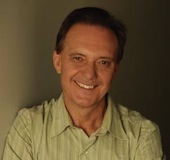
In 1975 I was a 21-year-old college journalist (shown right), home on spring break in Sarasota, Florida, when I noticed a blurb in the local newspaper about a charismatic hippie with a pet wolf who was building himself a spectacular house in the woods near town. I decided to go out and see it for myself. I don’t remember anything about the blurb. I doubt it mentioned anything about the influence of psychedelic drugs in this project. But I am guessing that I inferred it, because while I didn’t much care about techniques of home building—nor would my college-student readers—I was extremely interested in the implications of the psychedelic experience.

I’m looking at a taped-together, Xeroxed copy of the story that resulted from that visit. Still no mention of drugs, but there it is between the lines. I wrote about the philosophy of the young builder, a guy named Rick Doblin (shown right), just a year older than me. It was about trying to live authentically, guided by an inner light rather than society’s preconceived ideas; consciously working to discover and create his own destiny rather than trudging along the rutted tracks set before him.

These were the kinds of notions floating around a certain subculture in those days; it was evident in the woodland home itself, with its giant, rainbow-themed, spiritually suggestive stained-glass window. Maybe we discussed psychedelics, maybe we didn’t. But they were in the air.

I myself was not entirely unfamiliar. Under the influence of the psilocybin mushrooms my friends and I had learned to pluck from cow dung in the rural fields not far from campus, then boil into tea and drink, I had seen the world—and myself—from a novel vantage point. It was like being able, for a few precious hours, to climb above your life and view it from on high, a perspective every bit as revealing as seeing a too-familiar landscape from the top of a mountain. Instead of individual cornstalks or oak trees or buildings, you saw checkerboard patterns of fields, serpentine forests following the course of a river, villages arrayed around ascending spires of churches. You saw, for once, how it all fit together.

One experience stands out in my memory, because it is something that I have carried with me, every day since, for four decades.

As the drug took effect, instead of feeling the usual lift, I grew increasingly entangled by anxiety. I began to obsess about an ethical problem I was struggling with, which generalized to feelings of inadequacy in life overall and my inability to find solutions.

The more I struggled against these feelings, the weightier and more intractable they seemed. And then suddenly I had a vision: I saw myself with my arms wrapped around a boulder. I could feel its weight, almost unbearable to hold, and yet I was clinging to it. I knew that the heavy stone consisted of all my doubts and anxieties, and as I desperately clutched it to my chest, I saw in a flash that part of me chose to be anxious—as a way to avoid making choices and evade responsibility for them. To be free of that awful weight, all I had to do was open my arms, which I did. The stone simply dropped away.

Ever since, although it has rarely been easy, I’ve been able to see negative emotions, on a profound level, as a choice, and the will to let them go as something I could develop, like a muscle. The more I practiced, the better I got, and I no longer needed the mushrooms to do it.

There wasn’t a moment I decided to stop doing psychedelic drugs. When I left the college environment they became less available, and I gained more responsibilities—a job, a family, a professional reputation—all of which made any illegal activity, and the potential health risks, unacceptable. But I never lost my interest in those psychedelic experiences, or forgot their profundity, and the lasting good they did me.

Ten years after graduation, I had become an editor at the Miami Herald Sunday magazine, Tropic, when I noticed a story in the Tampa newspaper about a perennial college student who was promoting the party drug Ecstasy as a breakthrough in psychotherapy. I did a double take: it was Rick Doblin, the hippie with the house in the woods, the same guy I had written about a decade earlier. I assigned a Herald feature writer to do a cover story on him. We headlined it: “A Timothy Leary for the ’80s.”

Twenty years passed. Now I was editor of The Washington Post Magazine, and once again an article that spoke to my lingering interest in the possible positive effects of psychedelics caught my eye. This time it was in the New York Times, about Harvard initiating a study testing the use of MDMA—Ecstasy—to treat anxiety and depression in terminal cancer patients. The man sponsoring the study: a very sophisticated-sounding Harvard Kennedy School PhD named Rick Doblin—the hippie in the woods.

I got a phone number and Rick answered. When I told him my name, he laughed. He not only remembered me and the two stories from twenty and thirty years earlier, he still had copies of them both. And just that morning, he told me, he’d held up the “Tim Leary” cover of Tropic at a board meeting of the Multidisciplinary Association for Psychedelic Studies (MAPS), his nonprofit organization, to demonstrate how completely he’d remade his image, from a rebellious hippie to the sponsor of cutting-edge scientific research in some of the nation’s more conservative institutions.

This time I wrote the story myself, focusing on the MAPS-sponsored research a psychiatrist named Michael Mithoefer was conducting in Charleston, South Carolina, treating with MDMA-assisted psychotherapy mostly female victims of sexual abuse. The story appeared in The Washington Post Magazine in November 2007, and much of it has been adapted here in chapter forty-two.

I was pleased enough with the piece as published, but I felt it barely scratched the surface, both because of rapidly accumulating developments in psychedelic research and because I sensed that the significance of any given study could not be fully assessed without a deeper understanding of the people behind the studies, not to mention the century-long struggle of Western culture to come to grips with these powerful and, in some ways, profoundly threatening drugs.

This is what I have attempted in Acid Test.

Whatever success I have had I owe entirely to the openness and honesty of the principal characters. Those people listed in the acknowledgments have granted me access to scores of records and privileged documents and agreed to sit for what amounted to a combined total of more than a hundred hours of interviews, unflinchingly answering the most intimate and sensitive questions, revealing things that were personally painful and might very well expose them to negative judgments or significantly complicate their lives.

Their reasons for agreeing to all the above are transparent. They accepted my contention that the full and complete disclosure of all the information surrounding the use and abuse of psychedelic drugs, the history of psychedelic therapy, the motivations of the researchers, and the experiences of the subjects is the best argument for continued and extended support of rigorous and responsible investigation.

I owe a special debt to those among them who have undergone clinical trials to treat debilitating post-traumatic stress, a disorder that makes it particularly difficult and potentially painful to open up. In particular, I am indebted to Donna Kilgore, Tony Macie, and, above all, Nicholas Blackston. They all spent hours reviewing their case histories with me, leaving nothing off the record, as well as giving me permission to listen to or watch voluminous audio-and videotapes of their therapeutic sessions. It is hard to imagine a more naked vulnerability than allowing an outsider to witness hours spent delving into your deepest, most charged and haunting intimacies explored under the powerful effect of MDMA. Yet, these people made that sacrifice willingly, for no other reason than a sense of duty. They felt the therapy benefited them and quite possibly saved their lives, and they believed sharing their stories might help make the therapy available to others.

I am moved and awed by their courage.

Click here to read our Q&A with Tom Shroder.

Click here to learn more about Acid Test.

A man who strikes first admits that his ideas have given out.”

– Chinese Proverb

In the middle of difficulty lies opportunity.”

– Albert Einstein

Letting go of expectations is a ticket to peace. It allows us to ride over every crisis—small or large—like a beach ball on water.”

– Martha Beck

Always be on the lookout for the presence of wonder.”

– E.B. White

If you limit your choices only to what seems possible or reasonable, you disconnect yourself from what you truly want, and all that is left is compromise.”

– Robert Fritz

We make a living by what we get; we make a life by what we give.”

– Winston Churchill

The best hobbies are the ones that take us furthest from our primary occupation.”

– Dr. Evelyn Vogel, Dexter

Successful people are always looking for opportunities to help others. Unsuccessful people are always asking, ‘What’s in it for me?’”

– Brian Tracy

At the center of your being you have the answer; you know who you are and you know what you want.”

– Lao Tzu

The mind is everything. What you think, you become.”

– Buddha

My job is my hobby. I come to work to play.”

– Uli Becker, president, Reebok International

We never know how high we are
 till we are called to rise;
 And then, if we are true to plan,
 Our statures touch the skies.”

– Emily Dickinson

My task is really not to change myself but to become familiar with who I am.”

– Maureen Cook

The dove descending breaks the air / With flame of inkandescent terror.”

– T.S. Eliott

Education is not the filling of a pail, but the lighting of a fire.”

– William Butler Yeats

Remove those ‘I want you to like me’ stickers from your forehead
and, instead, place them where they truly will do the most good—on your mirror.”

– Susan Jeffers

Patience and perseverance have a magical effect before which obstacles vanish.”

– John Quincy Adams

Speaking more than one language is no longer just an asset in today’s job market; it is a requirement.”

– Tom Adams, CEO, Rosetta Stone

The goal of Life is to make your heartbeat match the beat of the universe, to match your nature with nature.”

– Joseph Cambell

Nurture your mind with great thoughts; to believe in the heroic makes heroes.”

– Benjamin Disraeli

Death is to lose the earth you know, for greater knowing; to lose the life you have, for greater life; to leave the friends you loved, for greater loving; to find a land more kind than home, more large than earth.”

– Thomas Wolfe

I have spent a good part of my life convincing people that a blank sheet of paper is the greatest opportunity in the world, and not frightening at all.”

– Marty Skler, executive vp, Walt Disney Imagineering

Pain is inevitable. Suffering is optional.”

– Dalai Lama

Do not be afraid of mistakes, providing you do not make the same one twice.”

– Eleanor Roosevelt

A diamond is a lump of coal that stuck with it.”

– Norwegian proverb

Remember that it’s okay to ask for help when you’re stumped, because sometimes you really can’t be expected to handle everything alone.”

– Martha Beck

Don’t follow, lead. Don’t copy, create. Don’t start, finish. Don’t sit still, move. Don’t fit in, stand out. Don’t sit quietly, speak up. (Not all the time, sure, but more often.)”

– Seth Godin

I was taught at a very young age that you can do whatever you want to, but you have to make it happen — not just talk about it.”

– Kathleen Jo Ryan

Permanence, perseverance and persistence in spite of all obstacles distinguishes the strong soul from the weak.”

– Thomas Carlyle

Don’t judge each day by the harvest you reap, but by the seeds you plant.”

– Robert Louis Stevenson

Who cares if my glass is half empty or half full; I still have something to drink.”

– Optimism rules

You have enemies? Good. That means you’ve stood up for something, sometime in your life.”

– Winston Churchill

It is only when the mind is free from the old that it meets everything anew, and in that there is joy.”

– J. Kristnhamurti, The First and Last Freedom

Practice kindness all day to everybody and you will realize you’re already in heaven now.”

– Jack Kerouac

If it isn’t good, let it die. If it doesn’t die, make it good.”

– Ajahn Chah

4oz tequila + 1oz TripleSec + 2oz lime juice + 1oz simple syrup (sugar=water), 1 cup crushed ice. Shake + dance around the kitchen.

– Avenida Margarita

A truly forgiving person is someone who experiences all the anger merited by injustice and still acts with fairness and compassion.”

– Martha Beck

Pretend that every single person you meet has a sign around his or her neck that says, ‘Make Me Feel Important.’ Not only will you succeed in sales, you will succeed in life.”

– Mary Kay Ash

The only person you are destined to become is the person you decide to be.”

– Ralph Waldo Emerson

Persist and persevere, and you will find most things that are attainable, possible.”

– Lord Chesterfield

I can’t go back to yesterday—because I was a different person then.”

– Lewis Carroll

I don’t do very well without fear. There needs to be a part of me saying, ‘That’s going to fail,’ so I can prove myself wrong.”

– Harry Potter's Daniel Radcliffe

Always look at what you have left. Never look at what you have lost.”

– Robert H. Schuller

No longer talk at all about the kind of man a good man ought to be, but be such.”

– Marcus Aurelius Antoninus

The man who acquires the ability to take full possession of his own mind may take possession of anything else to which he is justly entitled.”

– Andrew Carnegie

If your actions inspire others to dream more, learn more, do more and become more, you are a leader.”

– John Quincy Adams

We are all faced with a series of great opportunities brilliantly disguised as impossible situations.”

– Charles R. Swindoll

If people like you they’ll listen to you; if they trust you, they’ll do business with you.”

– Zig Ziglar

If you want to be busy, keep trying to be perfect. If you want to be happy, focus on making a difference.”

– Lisa Earle McLeod

I always maintained that the greatest obstacle in life isn’t danger, it’s boredom. The battle against it is responsible for most of the events in the world — good or ill.”

– Dr. Evelyn Vogel, Dexter

Be Inkandescent Magazine's Back Issues

Don’t miss the great advice our entrepreneurs have offered in the past. Click below to view our back issues.