• May 2011

You Gotta Have Soul

“Coffee,” said author Isak Dinesen, “is to the body what the Word of the Lord is to the soul.”

Starbucks CEO Howard Schultz’s new book, “Onward: How Starbucks Fought for Its Life Without Losing Its Soul, is a testimony to that possibility.

As our featured May Entrepreneur of the Month, we learn about Schultz’s passion for doing the right thing by his employees and customers, and why in January 2008 he reclaimed the job of CEO of Starbucks to rebuild the company he had grown from a seedling. While he has accomplished that mission (revenue last year topped $10.71 billion), Schultz insists that staying true to your principles is more important than making money.

Case in point: Our May Book of the Month, How Starbucks Saved My Life, by 70-year-old Starbucks employee Michael Gates Gill, show us how redemption can be found after all is lost.

Also in this issue: You’ll find soulful business lessons imparted in Deepak Chopra’s new book, courtesy of our Leadership columnist Robin McDougal. In our Management column, Dr. Alice Waagen of Workforce Learning explains how the management approach of Tom’s of Maine founder, Tom Chappell, helped him turn a $5,000 investment into a $100 million company.

For a little soulful networking this month, check out the May events happening in DC. If you are game to take a trip to Miami on May 19-20, sign up for the Empowered Woman Success Summit.

Since coffee is on our minds, we leave you a parting thought from comic columnist Dave Barry, who with his brother and fellow funny man Sam, will be our Entrepreneurs of the Month in June. “It is inhumane, in my opinion, to force people who have a genuine medical need for coffee to wait in line behind people who apparently view it as some kind of recreational activity.”

Amen to that. Have a great Spring. — Hope Katz Gibbs, founder
Inkandescent Public Relations / Be Inkandescent Magazine
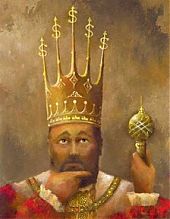
Illustration (above) by Michael Glenwood, www.mglenwood.com

Howard Schultz Moves Us 'Onward'

MAY 2011 ENTREPRENEUR OF THE MONTH

How did Starbucks fight for its life without losing its soul? Howard Schultz shows us the way.

By Hope Katz Gibbs
Inkandescent PR

Undoubtedly, Starbucks is one of the great 21st century American success stories.

The specialty coffee retailer has grown from a single store in Seattle in 1971 to 17,009 stores in 54 countries, as of January 2011.

Last month, it officially became the third-largest U.S. restaurant chain, according to industry tracker Technomic Inc., with more sales than Burger King Holdings Inc., but less than Subway, thanks to a 20 percent increase in second-quarter profits.

More than 60 million customers, called “guests” by Starbucks, sipped its coffee last year. They were served by 200,000 employees, aka: “partners,” who are referred to by their first names. Schultz, in fact, is known internally as Howard, and like all execs in the firm, his title is not capitalized. He is, modestly, the ceo.

That simple, but powerful, wordplay is part of Howard Schultz’s approach to building a coffee empire that exploded by serving up a great cup of joe, and sticking to its core philosophy.

Given that, it’s not surprising that Schultz’s 2011 book, “Onward: How Starbucks Fought for Its Life Without Losing Its Soul,” is such a forthright account. It not only details the experiences of his youth that laid the foundation for the company he has built, it provides case studies and details of meetings and conversations, making it a primer for how to do business with heart and conscience.

While some critics may say that Schultz’s 331-page tome is just another brilliant marketing strategy from the firm known for its advertising and PR finesse, it is also a revealing look at the philosophy behind the man, and his brand.

Spilling the Beans

As part of a nationwide book tour, Schultz stopped in DC on March 31 to address a packed ballroom at the Capital Hilton that was filled with members and guests of the Greater Washington Board of Trade. [Click here to view Schultz’s interview with Jim Dinegar, president of that group, on C-SPAN.]

In their 90-minute conversation, Schultz discussed management changes, customer feedback, Wall Street’s influence on how the company reports its financials – and the impact of that system – and why the new logo change is a precursor to Starbucks’ expanding market presence. Schultz also talked about the not-so-distant past, when Starbucks’ once-golden brand was showing signs of distress.

Consider these headlines:

January 31, 2008, USA TodayStarbucks takes action as sales cool. “After decades of eye-popping growth, Starbucks suddenly finds itself contemplating something once viewed as unthinkable: cutbacks,” wrote reporter Bruce Horovitz. “As rattled off by recently returned CEO Howard Schultz in a conference call with analysts late Wednesday, the cuts will be many.”

July 4, 2008, New York TimesPoor real estate decisions, not bad coffee, hurt Starbucks. “Starbucks wants to get back to its roots to help turn around its ailing fortunes,” said reporter Brad Stone. “It brought back the pioneering chief executive Howard Schultz to run the coffee chain day to day, and it has introduced a new blend, Pike Place Roast, that harks back to the location of its first Seattle store. Yet for all the new marketing efforts, Starbucks’s biggest mistakes and greatest challenges boil down to three words: location, location, and location.”

January 28, 2009, The GuardianStarbucks shuts 300 more stores. “Thousands of baristas are to lose their jobs as Starbucks shuts stores to cope with dwindling sales of lattes, cappuccinos, and frappuccinos as cash-strapped consumers lose their thirst for coffee,” explained New York correspondent Andrew Clark. “The Seattle-based chain tonight revealed a 70% slump in quarterly profits to $64.3m and announced that it intends to shed 6,700 employees this year. It is closing 300 stores, two thirds of which will be in the US, on top of 660 shutdowns last year.”

January 29, 2009, NPRMore Bad News Brewing At Starbucks. “Coffee giant Starbucks says it is closing 200 more U.S. stores and 100 abroad,” wrote reporter Wendy Kaufman. “Nearly 7,000 employees may lose their jobs in a new round of store closures and cost cutting. With quarterly profits down sharply and the economy getting weaker, Starbucks hopes to slash its costs by $500 million.”

Working With Soul

By 2010, with Schultz back at the helm, Starbucks began to turn around. As he explains in “Onward,” it is because the company returned to its core values: respect, dignity, passion, laughter, compassion, community, and authenticity. “These are Starbucks touchstones, the source of our pride,” he insists.

The key to the first Starbucks store in Pike Place Market is also a touchstone for Schultz. Literally. He began working there on Sept. 7, 1982, and still keeps the store’s key on his keychain.

“As a business leader, my quest has never been just about winning or making money; it has also been about building a great, enduring company, which has always meant trying to strike a balance between profit and social conscience,” he insists. “No business can do well for its shareholders without first doing well by all the people its business touches. For us, that means doing our best to treat everyone with respect and dignity, from coffee farmers and baristas to customers and neighbors.

“I understand that striving to achieve profitability without sacrificing humanity sounds lofty. But I have always refused to abandon that purpose—even when Starbucks and I lost our way.”

The Man Behind the Brand

Schultz grew up in the projects of Brooklyn. His father didn’t have health insurance, and after slipping on the ice and breaking his hip, lost his job as a bus driver. Schultz was 7 at the time and explains that this was one of the many experiences that inspired him to build a company with compassion for its employees. After paying his way through college, he and his wife Sheri moved to Seattle, where Schultz had taken a job as the marketing chief of the then-small coffee company, Starbucks.

“I spent my first weeks working at the Pike Place store, learning all about coffee, scooping fresh beans for customers, and sealing them in small bags,” he writes, noting that it was on a business trip to Italy that he discovered his true passion. “As I visited small espresso bars throughout Milan and Verona, I was taken by the power that savoring a simple cup of coffee can have to connect people and create community among them, and from that moment on I was determined to bring world-class coffee and the romance of Italian espresso bars to the U.S. It was an experience I fervently believed could enrich people’s lives.”

So he left Starbucks to create his own company, Il Giornale, which started with a shop in Seattle and another over the border in Vancouver, B.C. In 1987, with the help of investors, he had the opportunity to buy Starbucks’ six stores and roasting plant. By 1988, The Starbucks Company had 11 stores, 100 employees, and Schultz was on his way to creating a national brand.

With the Sweet Comes the Bitter

By 2000, he not only had established the brand, he had defined the company’s values by offering part-time workers comprehensive healthcare coverage and equity in the form of stock options. Having accomplished his goals, he stepped down as CEO and became chairman to focus on global strategy and expansion.

“In the years that followed, we accelerated our store growth, and our stock prices soared as our sales and profits increased quarter after quarter,” he says. “Until the quarter it didn’t.”

Schultz never points a finger at the successors or any single bad decision. Rather, he says the problems were incremental, “like a single loose thread that unravels a sweater inch by inch.” And on top of the internal issues, there were other factors: the worldwide financial crisis, a shift in consumer behavior, and an onslaught of competitors.

“As chairman, I held myself responsible for the problems we ourselves had created,” he shares. “And although I did not know exactly how to address the variety of external pressures bearing down on us, I knew that, without daily control of the business, I was essentially powerless to stop Starbucks from sinking.”

A Shot of Inspiration

In “Onward,” Shultz shares the details of what happened upon his return. In chapter 1, he shares insights from the Tuesday afternoon in February 2008 when he closed all 7,100 U.S. Starbucks stores for three hours. The goal was to retrain 135,000 baristas to pour the perfect shot of espresso.

“Pouring espresso is an art, one that requires the barista to care about the quality of the beverage,” he explains in chapter 1 of his book. “If the barista only goes through the motions, if he or she does not care and produces an inferior espresso that is too weak or too bitter, then Starbucks has lost the essence of what we set out to do 40 years ago: inspire the human spirit.

“I realize this is a lofty mission for a cup of coffee, but this is what merchants do. We take the ordinary—a shoe, a knife—and give it new life, believing that what we create has the potential to touch others’ lives because it touched ours.” Click here to read more.

Starbucks Rules

“Life is a sum of all your choices,” said Albert Camus.

That quote by the French philosopher is not just mentioned in his 2011 book “Onward,” it seems to sum up the ideals of Starbucks entrepreneur Howard Schultz.

Throughout the 33-chapter tome, the coffeehouse mogul weaves his wisdom and lessons learned about business and life into the tale of how, since 2008, he has brought the company back from the brink.

Revenue in 2010 topped $10.71 billion, and financial results for the most recent quarter, which ended April 3, 2011, showed a 20 percent increase in profit as more customers visited the company’s U.S. coffee shops. In fact, the chain reported that sales at U.S. stores open at least 13 months rose 7 percent during the quarter.

But Schultz’s book makes it clear that his goal is more than making money. From working with baristas in the Bronx to coffee bean growers in Rwanda, following is a taste of some of Schultz’s ideas. We think they are worth savoring.

Howard Schultz’s Tips for Entrepreneurs

1. Love

When we love something, emotion often drives our actions. This is the gift and the challenge entrepreneurs face every day. The companies we dream of and build from scratch are part of us and are intensely personal. They are our families. Our lives.

But the entrepreneurial journey is not for everyone. Yes, the highs are high and the rewards can be thrilling. But the lows can break your heart. Entrepreneurs must love what they do to such a degree that doing it is worth the sacrifice and, at times, pain. But doing anything else, we think, would be unimaginable. (from Chapter 2)

2. Make it Personal

Work should be personal. For all of us. Not just for the artist and the entrepreneur. Work should have meaning for the accountant, the construction worker, the technologist, the manager, and the clerk.

Infusing work with purpose and meaning, however, is a two-way street. Yes, love what you do, but your company should love you back. As a merchant, my desire has always been to inspire customers, exceed their high expectations, and establish and maintain their trust in us. As an employer, my duty has always been to also do the same for people on this side of the counter. For our partners. This latter responsibility has driven me for many, many years. (from Chapter 3)

3. Communicate

I have long believed in the power of a word or a single phrase to effectively communicate a business imperative — and to inspire people. The best words are never big or complicated, but are packed with emotion and meaning, leaving no question of what I expect of myself or others. (from Chapter 12)

4. Have Reverence

Building a great, enduring company requires thoughtfulness and, at times, the courage to make very difficult decisions. For Starbucks, July 2008 was a moment when I had to make choices that I never, in my 26 years at the company, had imagined I would be face with. (from Chapter 19)

5. Learn

For more than a decade, a glass bottle containing a thin brown liquid sat on my desk. What appeared at first glance to be a stout version of an old-fashioned soda bottle was actually a carbonated coffee drink that, back in the late 1990s, Starbucks had co-invented, marketed, and then watched fail miserably.

Mazagran. The name was printed across the bottle in white capital letters, but the product’s symbolism was also imprinted on my psyche: Do not hide from mistakes; celebrate, and learn from them. (from Chapter 27)

6. Embrace the Challenges

I’ve come to think that I am my best as a leader when Starbucks is being challenged or fighting for survival. I’m comfortable with, and in a way enjoy, the rugged steep ascent. That is my nature.

And while I would not want to constantly battle the odds, the raw feeling of accomplishing something that others did not think possible, or leading people beyond where they thought they could go, is extremely gratifying. (from Chapter 33)

Buy “Onward” at any Starbucks store, and online at Starbucks.com and Amazon.com.

About Howard Schultz

Chairman, president, and CEO of the Starbucks Coffee Company, Howard Schultz has won the Horatio Alger Award for those who have overcome adversity to achieve success; the Rev. Theodore M. Hesburgh Award for Business Ethics, given by Notre Dame University’s Mendoza College of Business; the Botwinick Prize for Business Ethics from Columbia Business School; and the first John Wooden Global Leadership Award from the UCLA Anderson School of Management.

He has been included in Time magazine’s “TIME 100,” a list of the most influential people in the world. He and his wife Sheri live in Seattle with their two children. Learn more here: www.starbucks.com.

About Co-Author Joanne Gordon

“Onward,” is co-written by Joanne Gordon, a former Forbes writer who has spent more than a decade profiling companies and business leaders from numerous publications.

She has written five previous books, including: “Closing The Engagement Gap: How Great Companies Unlock Employee Potential for Superior Results,” and “Be Happy at Work: 100 Women Who Love Their Jobs.”

For more information, visit www.joannegordononline.com.

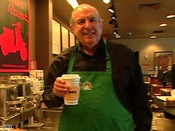
Photo of Schultz (at top) courtesy of C-SPAN, March 31, 2011. Other photos by Starbucks.com.

How do you stay resilient? It’s about momentum. Like riding a bicycle. If you stop you fall over. So I keep pedaling.”

– Diane Lane

Confidence is the most important thing you can teach someone… if you can teach them confidence, you don’t have to teach them anything else.”

– Vin Diesel

Friendship is the only cement that will hold the world together.”

– Woodrow Wilson

Traveling is one way of lengthening life, at least in appearance.”

– Benjamin Franklin

Have the courage to follow your heart and intuition. They somehow know what you truly want to become.”

– Steve Jobs

Why am I whispering when I have something to say?”

– Eve Ensler

That which grows fast withers as rapidly; that which grows slowly endures.”

– J.G. Holland, novelist

Always look at what you have left. Never look at what you have lost.”

– Robert H. Schuller

I always maintained that the greatest obstacle in life isn’t danger, it’s boredom. The battle against it is responsible for most of the events in the world — good or ill.”

– Dr. Evelyn Vogel, Dexter

We never know how high we are
 till we are called to rise;
 And then, if we are true to plan,
 Our statures touch the skies.”

– Emily Dickinson

Let yourself be silently drawn by the strange pull of what you really love.”

– Jalaluddin Rumi

This is the age when magical technologies make more and more radically fun ideas plausible, even easy. You’re only limited by your creativity.”

– Martha Beck

The quality of your life is directly related to the amount of uncertainty you can comfortably live with.”

– Tony Robbins

The awakening to the mystery of life is a revolutionary event; in it an old world is destroyed so that a new and better one may take its place.”

– J.J. Van Der Leeuw, The Conquest of Illusion

To be what we are, and to become what we are capable of becoming, is the only end of life.”

– Robert Louis Stevenson

Passion makes perfect.”

– Eugene Biro

Happiness is an attitude. We either make ourselves miserable, or happy and strong. The amount of work is the same.”

– Francesca Reigle

You must have chaos within you, to create a dancing star.”

– Frederic Nietzsche

The young man knows the rules, but the old man knows the exceptions.”

– Oliver Wendell Holmes Jr., U.S. Supreme Court justice

You must learn to be still in the midst of activity 
and to be vibrantly alive in repose.”

– Indira Ghandi

To find what you seek in the road of life, leave no stone unturned.”

– Edward Bulwer Lytton

‎No one is useless in this world who lightens the burden of another.”

– Charles Dickens

It is only when the mind is free from the old that it meets everything anew, and in that there is joy.”

– J. Kristnhamurti, The First and Last Freedom

The person who makes a success of living is the one who see his goal steadily and aims for it unswervingly. That is dedication.”

– Cecil B. DeMille

Never never never never give up.”

– Winston Churchill

You often meet your fate on the road you take to avoid it.”

– Goldie Hawn

No man will make a great leader who wants to do it all himself, or to get all the credit for doing it”

– Andrew Carnegie

Entrepreneurs need to search purposefully for the sources of innovation that indicate opportunities for success.”

– Peter F. Drucker

If my mind can conceive it, and my heart can believe it, I know I can achieve it.”

– Jesse Jackson

That which does not kill us makes us stronger.”

– Friedrich Nietzsche

Luck is what happens when preparation meets opportunity.”

– Seneca

When I dare to be powerful—to use my strength in the service of my vision, then it becomes less and less important whether I am afraid.”

– Audre Lorde

I have spent a good part of my life convincing people that a blank sheet of paper is the greatest opportunity in the world, and not frightening at all.”

– Marty Skler, executive vp, Walt Disney Imagineering

I don’t do very well without fear. There needs to be a part of me saying, ‘That’s going to fail,’ so I can prove myself wrong.”

– Harry Potter's Daniel Radcliffe

Education is the ability to listen to almost anything without losing your temper or your self-confidence.”

– Robert Frost

The music is all around us. All you have to do is listen.”

– August Rush

Are you willing to help other people succeed even when it’s not a requirement of your job to be of assistance?”

– Steven Schussler

The great use of life is to spend it on something that will outlast it.”

– William James

As each woman realizes her power, she transforms the world.”

– Patrice Wynne, WomanSpirit Sourcebook

We must be willing to let go of the life we have planned so as to have the life that is waiting for us.”

– Joseph Campbell

My goal was to tell the life side of the story. We have become a nation of voyeurs that expect sensationalism, and that offends me.”

– Kathleen Jo Ryan

Just don’t give up trying to do what you really want to do.
 Where there is love and inspiration, I don’t think you can go wrong.”

– Ella Fitzgerald

Do one thing every day that scares you.”

– Eleanor Roosevelt

Hold fast to dreams, for if dreams die, life is a broken-winged bird that cannot fly. Hold fast to dreams, for when dreams go, life is a barren field frozen with snow.”

– Langston Hughes

Don’t follow your dreams. Chase them.”

– Richard Dumb

Success is the necessary misfortune of life, but it is only to the very unfortunate that it comes early.”

– Anthony Trollope

A people who mean to be their Governors must arm themselves with the power which knowledge gives.”

– James Madison

Tolerance and patience should not be read as signs of weakness. They are signs of strength.”

– The Dalai Lama

If you do work that you love, and the work fulfills you, the rest will come.”

– Oprah Winfrey

Letting go of expectations is a ticket to peace. It allows us to ride over every crisis—small or large—like a beach ball on water.”

– Martha Beck

Be Inkandescent Magazine's Back Issues

Don’t miss the great advice our entrepreneurs have offered in the past. Click below to view our back issues.